Hongik Univ. Station Exit 1 · 8F · 1:1 Personalized Aesthetic Dermatology
en-US

Body Botox for Muscle Contouring: What It Actually Treats
Calves and shoulders, not fat. Why the clinic says plainly what this does not do, what the consultation must separate first, and how long the effect takes.
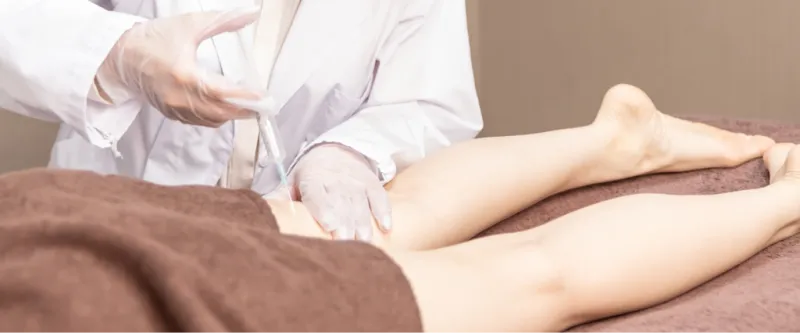
Body Botox for Muscle Contouring: What It Actually Treats
Medically reviewed by Dr. Chae-ho Lee, Medical Director, Doctorpetit Clinic Hongdae
The clinic's description of this treatment contains a sentence that most marketing would leave out.
Body Botox does not remove fat, treat obesity or directly tighten loose skin.
That is in the clinic's own statement of benefits and realistic outcomes — placed there, not in a disclaimer at the bottom. A provider that tells you what a body treatment does not do, inside the paragraph explaining what it does, has narrowed its own market on purpose. It is also the most useful sentence available to anyone deciding whether to book.
Because the question this treatment answers is narrow: is the shape you want to change made of muscle?
(A note on the name: excessive sweating is treated by a separate service at this clinic, with its own candidacy, timeline and risks. This article is about the muscle-contouring use.)
**

What it is
Doctorpetit Clinic Hongdae describes Body Botox as a non-surgical injectable treatment that uses botulinum toxin to temporarily reduce the activity of selected muscles. It may be used where prominent or overactive muscles contribute to the appearance of the body, such as the calves or the trapezius and shoulder area. By reducing muscle contraction, the clinic states, treatment may create a slimmer or more relaxed appearance in appropriately selected patients.
Two named areas, and they are not arbitrary. Calves and trapezius are the two places where a visible outline is most often produced by muscle bulk rather than by anything else — a well-developed calf and a heavy-looking shoulder line are both muscle in a way that, say, an abdomen usually is not.
The question the consultation has to settle
The clinic's consultation description is unusually explicit about the discrimination being made.
The clinician evaluates the relevant muscle group — its size, activity, symmetry and relationship to surrounding anatomy — alongside medical history, medications, allergies and previous botulinum toxin treatments. And then the sentence that matters: the clinician can determine whether the appearance is primarily related to muscle prominence, or whether another factor such as fat or loose skin is contributing.
That is the whole decision, and it cannot be made from a photograph or from your own opinion of your calves. Three different things can produce a similar outline, and only one of them responds to a muscle-relaxing injection.
Its candidate description says the same thing from the patient's side: suitable candidates are healthy adults with prominent or hypertrophied muscles contributing to the appearance they want to change, who have realistic expectations about a temporary, muscle-based contouring effect, and who understand that the treatment does not directly reduce body fat.
The phrase "despite an otherwise stable body weight" appears in the clinic's account of why U.S. patients consider it. That is a useful self-test. If the outline persists at a weight you are otherwise content with, muscle is a plausible explanation. If it changes with your weight, it is probably not.
How the appointment runs
Six steps, and none of them is complicated.
Consultation and assessment of the target area and goals; the skin cleansed and injection points marked; botulinum toxin injected into the targeted muscles; muscle activity reduced in the treated area; the injection sites cleaned; and post-treatment instructions given.
Anesthesia: generally none. The clinic states that Body Botox is performed without general anesthesia or sedation, with topical numbing cream used when appropriate, particularly for patients concerned about injection discomfort. Expect brief pinching, pressure or stinging during the injections.
Time: the injection portion often takes approximately 10 to 20 minutes, though the total appointment runs longer because of consultation, assessment and preparation. Most patients do not require an overnight stay.
That gap between injection time and appointment time is worth planning around. Ten minutes of needle work does not mean a ten-minute visit, and for a first treatment the assessment is the larger half.
The timeline
Slower than facial treatment, and the clinic says so plainly: effects are gradual rather than immediate.
Early changes may become noticeable over the following days, with the effect generally becoming more apparent over approximately two weeks. Duration varies by treatment area, dose, muscle activity and individual response, and the cosmetic muscle-slimming effect is temporary, with repeat treatment considered when it diminishes.
Note how the duration is expressed here. The clinic's facial services carry explicit ranges — two to three months, three to four months. For Body Botox the published statement is that duration varies by area, dose, muscle activity and individual response, and it stops there.
Read that as honesty rather than as an omission. Calf and trapezius muscles are larger, used differently, and loaded differently from person to person, and a number that applied to all of them would be a number someone made up. Ask at your consultation what is expected for your area and dose; do not expect a figure from an article.
What can go wrong
The ordinary effects first: injection-site pain, redness, swelling, bruising or tenderness. Nothing surprising.
Then the ones specific to treating working muscles, which the clinic states area by area.
Depending on the treated muscle, temporary weakness, altered muscle function or asymmetry can occur.In calf treatment, unwanted weakness could potentially affect activities that rely on the treated muscles. Calves are load-bearing. Walking, stairs, running, standing for a long day — all of it runs through the muscles being treated, and a temporary reduction in their activity shows up in exactly those places. This is the single most important thing to plan around, and it is a poor fit with a trip built around walking a foreign city.
In the shoulder and trapezius area, temporary weakness or changes in muscle function may occur. Trapezius carries loads. Bags, luggage, a backpack — again, the treated muscle is the one doing the job.
None of that is a reason not to have the treatment. It is a reason to have it at a time when you are not depending on the muscle, which for an international patient usually means thinking about the order of the trip rather than only the date.
A self-test before you book
None of this replaces an examination, but two observations are yours to make and both are useful to bring.
Does the outline change when you flex? A calf that changes shape markedly when you rise onto your toes, or a shoulder line that changes when you shrug, is an outline with a large muscular component. One that looks much the same either way is telling you something different.
Has it persisted through weight changes? The clinic's own account of why U.S. patients consider this treatment names visibly prominent muscles despite an otherwise stable body weight. An outline that tracked your weight up and down is unlikely to be muscle.
Bring both answers. They will not decide the recommendation, but they will make the first five minutes of the consultation more productive than a general request to look slimmer.
Who should not have it

People who are pregnant or breastfeeding, who are allergic to botulinum toxin, who have an infection at the treatment site, or who have certain neuromuscular disorders may not be suitable, and should be evaluated by a qualified doctor first. Background at MedlinePlus on neuromuscular disorders and allergy.
Before treatment, disclose your complete medical history, medications, supplements, allergies, neuromuscular conditions and previous botulinum toxin treatments. Because bruising can occur, the clinician may review medications or supplements that increase bleeding or bruising risk — a review, not an instruction to stop anything on your own. Follow the clinic's guidance on alcohol, exercise and skincare beforehand. Routine fasting is generally unnecessary when treatment is performed without sedation. General background at drug safety and blood thinners.
Afterward
Follow the clinician's instructions about pressure or massage of the injection areas and about physical activity. Temporary bruising, swelling or tenderness can generally be managed with routine supportive care.
Then the instruction that matters most here: monitor for unusual or worsening weakness and contact the treating clinic if unexpected symptoms develop. For a body treatment, weakness is the effect that needs watching, because the line between the intended reduction and more than you wanted is a line you feel rather than see.
The clinic adds that international patients should have a way to contact it after returning home if follow-up questions arise. Arrange that before you leave — its contact page is the route it names — rather than looking for it in week three.
What a realistic result looks like
The clinic's list of potential benefits is worth reading in its own words: reduced prominence of selected muscles, a slimmer-looking contour in an appropriate treatment area, a more relaxed appearance of prominent muscles, a non-surgical option, and relatively limited downtime. Results are temporary and vary between patients.
Every phrase is bounded. Selected muscles. An appropriate treatment area. Relatively limited downtime. And then the exclusion again — no fat removal, no obesity treatment, no skin tightening.
Held to that scale, it is a sensible option for a specific finding. Held to a larger one, it will disappoint, and no dose changes that. If the assessment finds fat or laxity rather than muscle, the clinic runs separate services aimed at those, which its about page lists — and being told that is a better outcome than being treated anyway.
The Bottom Line
The clinic states plainly that Body Botox does not remove fat, treat obesity or directly tighten loose skin. It temporarily reduces the activity of selected muscles.
The named areas are the calves and the trapezius and shoulder region, where a visible outline is most often produced by muscle bulk.
The consultation's job is to determine whether the appearance is primarily muscle, or whether fat or loose skin is contributing.
Effects are gradual, becoming more apparent over approximately two weeks. The clinic publishes no single duration figure for the body, citing area, dose, muscle activity and individual response.
Temporary weakness in the treated muscle is the characteristic risk; for calves it can affect activities that rely on them, and for shoulders it can affect carrying.
Frequently Asked Questions
Does Body Botox reduce fat?
No. The clinic states directly that it does not remove fat, treat obesity or directly tighten loose skin. It reduces the activity of selected muscles.
Which areas does the clinic name?
The calves and the trapezius and shoulder area, where prominent or overactive muscles contribute to the body's appearance.
How do I know if my shape is muscle?
You do not, on your own. The clinic describes the clinician assessing muscle size, activity, symmetry and surrounding anatomy to determine whether the appearance is primarily muscle or whether fat or loose skin is contributing.
How long until I see a change?
Effects are gradual. Early changes may appear over the following days, with the effect becoming more apparent over approximately two weeks.
How long does it last?
The clinic states that duration varies by treatment area, dose, muscle activity and individual response, rather than giving one figure for the body. Ask what is expected for your area and dose.
Will my legs feel weak?
Temporary weakness or altered muscle function can occur in the treated area. The clinic notes that in calf treatment this could potentially affect activities that rely on those muscles.
Is an overnight stay needed?
The clinic describes it as a short outpatient procedure, with the injection portion often around 10 to 20 minutes and no overnight stay required for routine treatment.
This article is for general informational purposes and does not constitute individualized medical advice. It is not a self-diagnosis tool. Whether this treatment suits your anatomy can only be determined through a consultation with a qualified dermatologist or other appropriately qualified clinician who has examined you in person.
Academic & Clinical Sources
- MedlinePlus — Botox
- MedlinePlus — Neuromuscular Disorders
- MedlinePlus — Allergy
- MedlinePlus — Blood Thinners
- MedlinePlus — Drug Safety
- MedlinePlus — Bruises
- MedlinePlus — Weight Control
Ready for Your Personalized Aesthetic Consultation in Hongdae?
Located right at Hongik Univ. Station Exit 1 (8F, 151 Yanghwa-ro, Mapo-gu). Multilingual coordinators for English, Traditional Chinese, and Simplified Chinese patients.