Hongik Univ. Station Exit 1 · 8F · 1:1 Personalized Aesthetic Dermatology
en-US

Botox vs Dermal Filler: Which Treats Your Concern?
They act on different things, so the choice is rarely open. What your concern is made of, which one is reversible, and why the timelines do not compare.

Botox vs Dermal Filler: Which Treats Your Concern?
Medically reviewed by Dr. Chae-ho Lee, Medical Director, Doctorpetit Clinic Hongdae
The question as usually asked has a hidden assumption in it: that both treatments could address your concern, and the job is to pick the better one.
Usually they could not. These two treatments act on different things, and for most specific concerns only one of them is even in the conversation. The useful version of the question is not which is better but what is my concern actually made of — and once that is answered, the choice mostly answers itself.
So this is a comparison built the other way round. Start with what each one does, then work back to what that means for the thing you see in the mirror.
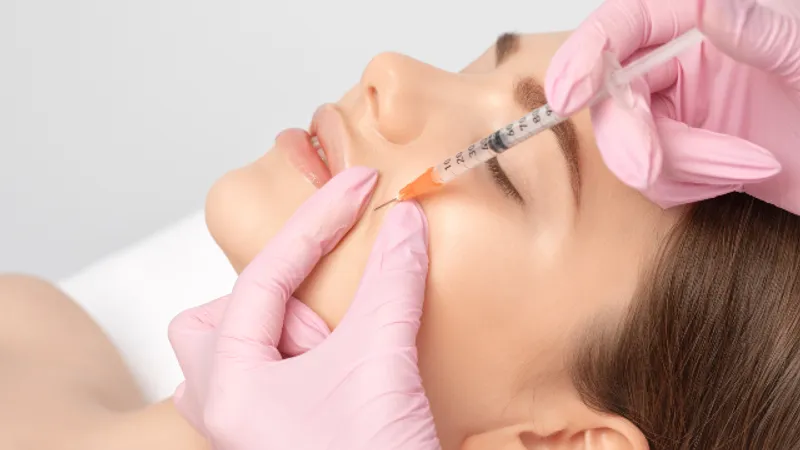
What each one acts on
Doctorpetit Clinic Hongdae describes its two injectable categories in terms that do not overlap.
Botulinum toxin treatments are used to temporarily reduce targeted muscle activity. Depending on the area treated, the clinic says this can soften dynamic wrinkles, reduce jaw-muscle activity, or decrease excessive sweating. Nothing is added; something is turned down.
Dermal fillers are injectable treatments used to restore facial volume, smooth wrinkles, and enhance features such as the lips, cheeks, chin and jawline. The filler is injected into targeted areas based on the patient's facial structure and treatment goals. Nothing is turned down; something is added.
That is the whole distinction, and everything practical follows from it. One treats movement. The other treats volume.
Working back to your concern
Here is the sorting question. Look at the thing that bothers you, and ask: is it there when your face is still?If it appears when you move — when you frown, raise your eyebrows, smile, squint — you are looking at something produced by muscle activity. The clinic's wrinkle treatment is described for exactly this: lines that keep re-forming because a muscle keeps making them, with the forehead, the area between the brows and around the eyes named as the concerns. Its candidates are adults whose lines are caused or worsened by repeated facial-muscle movement. A treatment that reduces muscle activity has something to work on here.
If it is there when your face is completely at rest — a hollow, a flattened contour, a fold that does not disappear when the expression does — a muscle treatment has nothing to act on, because no muscle is producing it at that moment. This is where the clinic's filler services sit. Its contour filler description is a non-surgical facial contouring treatment that adds volume and support to specific facial points, which it says restores lost volume and smooths deep wrinkles while enhancing symmetry and sculpting areas such as the jawline and cheekbones.
If it is about the surface itself — pore appearance, fine texture, skin elasticity — neither of the two categories above is aimed at it. The clinic runs a separate treatment for that, delivered into the shallow layers of skin rather than into muscle, and a separate menu again for lasers, boosters and energy-based work. Choosing between Botox and filler for a texture concern is choosing between two wrong answers.
Most people, honestly examined, have some of all three. Which is why the clinic's account of its consultation involves assessing facial movement, skin condition and elasticity rather than asking which treatment you would like.
The timelines are not comparable
This is where a side-by-side table would normally go, and where one would mislead.
Botulinum toxin, as this clinic publishes it: the effect begins gradually two to three days after treatment, becomes most noticeable at around two weeks, and lasts approximately two to three months for its wrinkle treatment. At the category level it states initial effects within roughly three to seven days, fuller effects at one to two weeks, and results commonly lasting about three to four months, varying by area, product, dose, muscle activity and individual response. The appointment itself it describes as roughly five to ten minutes for wrinkle treatment, or ten to thirty minutes across the category.
Contour filler, as this clinic publishes it: an immediate visible lifting effect, with results typically lasting six to eighteen months depending on the treated area and the product used. Minor swelling or slight bruising may occur, usually resolving within a few days.
Two differences matter more than the numbers.
Filler shows up immediately; botulinum toxin does not. If you are treating something before an event, that is not a preference — it is a constraint. A treatment whose effect is most noticeable at two weeks cannot be judged, or relied on, at three days.
Filler lasts several times longer. Six to eighteen months against two to four is not a marginal difference, and it changes what a mistake costs. Which brings up the asymmetry that people considering this choice most often overlook.
One of them is reversible
Botulinum toxin fades. That is the mechanism working out, and there is no way to accelerate it — you wait.
Hyaluronic acid filler is different. The clinic offers a filler dissolving injection that uses hyaluronidase, an enzyme that breaks down hyaluronic acid, for cases where side effects, excessive volume or asymmetry occur after a filler procedure. It describes absorption occurring within several hours to 24–48 hours after injection depending on the amount and type of filler and the dose of enzyme used, in an appointment of roughly fifteen to thirty minutes.
Read that as a genuine advantage of filler, and then read the two limits the clinic puts on it, because both are real.
Not every filler can be dissolved. The clinic states that patients with a filler that cannot be dissolved with hyaluronidase — such as many non-hyaluronic-acid or permanent fillers — are not suitable for the treatment. Whether your filler is reversible is decided by what was injected, on the day it was injected. That makes "what exactly are you using" a question worth asking before the needle rather than after.
Dissolving is not surgical precision. The clinic notes that hyaluronidase can also affect naturally occurring hyaluronic acid in the surrounding tissue, so the amount of volume lost can sometimes be difficult to predict, and that complete or partial dissolution depends on the filler's type, cross-linking, concentration, location and the enzyme dose used. It also lists possible effects including temporary pain, swelling, redness, bruising, itching, tenderness, and allergic or hypersensitivity reactions.
So the honest version is: filler is reversible in a way that toxin is not, if it is hyaluronic acid, and reversing it is its own procedure with its own uncertainty. That is still better than no exit at all. It is not a reason to be casual about the decision.
What can go wrong, and how the two differ
Both categories share the ordinary injection-site effects. The clinic names temporary redness, swelling, bruising, tenderness or mild discomfort for its botulinum toxin treatments, and possible swelling, bruising, pain, infection and filler-related complications for its fillers. MedlinePlus keeps general background on bruises, which behave the same way whatever produced them.
Beyond that they diverge, and the divergence follows from the mechanism.
Botulinum toxin's characteristic problems are about muscles doing less than intended. The clinic names temporary headache, muscle weakness, asymmetry or unwanted relaxation of nearby muscles depending on the area, and rare but potentially serious effects including allergic reactions or spread of toxin effects causing significant muscle weakness or difficulty swallowing or breathing, for which it advises prompt medical attention.
Filler's characteristic problems are about material sitting where it should not. The clinic names infection among filler-related complications, and lists relevant allergies and active skin infections as reasons to postpone. At the category level, the U.S. Food and Drug Administration's guidance on dermal fillers and its consumer material on filler do's and don'ts describe serious risks associated with filler entering a blood vessel, including effects on vision — which is why any visual change after a facial filler is a same-day medical matter rather than something to message about.
Neither list should decide the question by itself. Both belong in the conversation where the choice is made.
What this clinic actually offers on each side
Worth knowing, because the menu is not the generic one.
Its botulinum toxin services are extensive and distinctly Korean in emphasis: wrinkle treatment, a skin-layer variant, jaw-muscle treatment, salivary gland treatment, an expression-refinement service, a full-face lift protocol, body treatment, and treatment for excessive sweating.
Its filler services are fewer and unusually specific: contour and point lifting, ear filler, shoulder filler, and the dissolving injection. If you arrive expecting a lips-and-cheeks filler menu, the shape of this one is worth looking at first — it is built around contour and around areas most clinics do not list at all.
The clinic states its filler approach as one-to-one customized consultation considering individual skin condition and elasticity, with certified genuine products used according to labeled quantities. Its about page sets out the categories side by side.
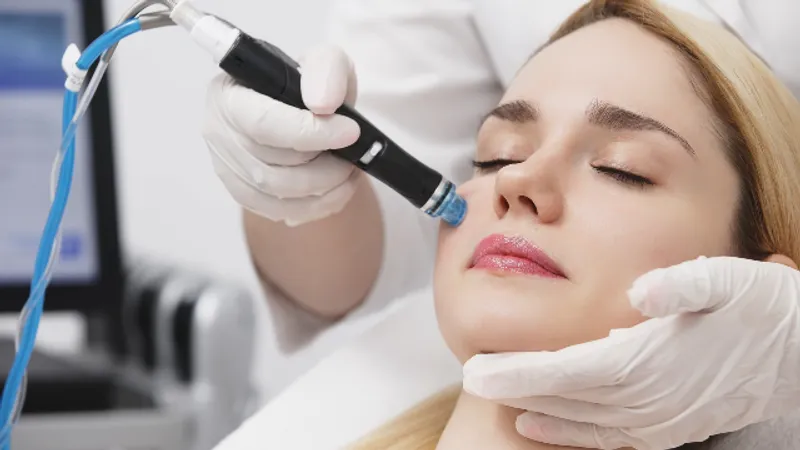
Can you have both?
Yes, and the clinic's consultation model is built on the assumption that you might. Its documentation describes assessing facial anatomy, muscle activity, skin condition and elasticity together rather than treating a request as a decision already made.
That said, "both" is not a hedge for not deciding. If the two are combined, it should be because two different things were found — movement in one area, lost volume in another — and each treatment is aimed at the one it can act on. A plan that puts both in the same place because you were unsure which you wanted is a plan without an assessment behind it.
Ask which finding each part of the plan is for. A clinician who assessed you can say, and that is a question worth sending ahead through the clinic's contact page rather than raising for the first time in the room.
The Bottom Line
The clinic describes botulinum toxin as temporarily reducing targeted muscle activity, and dermal filler as restoring facial volume. They act on different things, so most specific concerns admit only one.
The sorting question is whether your concern is visible when your face is completely at rest. If it appears only on movement, that is muscle. If it is there at rest, that is volume.
Timelines differ sharply: the clinic publishes onset at two to three days and duration around two to four months for botulinum toxin, against an immediate effect lasting six to eighteen months for contour filler.
Hyaluronic acid filler can be dissolved with hyaluronidase within hours to 24–48 hours, but not every filler is dissolvable and the volume lost can be hard to predict. Botulinum toxin simply fades.
Texture, pore appearance and elasticity belong to neither category; the clinic runs separate treatments for those.
Frequently Asked Questions
What is the basic difference?
The clinic describes botulinum toxin as temporarily reducing targeted muscle activity, and dermal fillers as restoring facial volume and enhancing features. One turns something down; the other adds something.
Which one treats forehead lines?
It depends on whether they appear with movement or persist at rest. The clinic's wrinkle treatment is described for expression lines that form as facial muscles move; lines present at rest are a volume or skin question instead.
Which lasts longer?
Contour filler, by a wide margin. The clinic publishes six to eighteen months for its contour filler against approximately two to three months for its wrinkle treatment and three to four months at the botulinum toxin category level.
Which works faster?
Filler. The clinic describes an immediate visible lifting effect from contour filler, while botulinum toxin begins at two to three days and is most noticeable at around two weeks.
Can filler be undone?
Hyaluronic acid filler can be treated with hyaluronidase, which the clinic describes as acting within several hours to 24–48 hours. Many non-hyaluronic-acid or permanent fillers cannot be dissolved this way.
Can I have both in one visit?
The clinic's consultation assesses muscle activity, skin condition and elasticity together, so a plan may involve more than one treatment — but each part should be aimed at a separate finding rather than at the same uncertainty.
What if my concern is texture rather than lines?
Neither category is aimed at that. The clinic runs a skin-layer botulinum toxin treatment, skin boosters, lasers and energy-based treatments as separate services for texture and elasticity concerns.
This article is for general informational purposes and does not constitute individualized medical advice. It is not a self-diagnosis tool. Which treatment suits your concern can only be determined through a consultation with a qualified dermatologist or other appropriately qualified clinician who has examined you in person.
Academic & Clinical Sources
- MedlinePlus — Botox
- MedlinePlus — Skin Aging
- MedlinePlus — Allergy
- MedlinePlus — Bruises
- MedlinePlus — Talking With Your Doctor
- U.S. Food and Drug Administration — Dermal Fillers (Soft Tissue Fillers)
- U.S. Food and Drug Administration — Dermal Filler Do's and Don'ts
Ready for Your Personalized Aesthetic Consultation in Hongdae?
Located right at Hongik Univ. Station Exit 1 (8F, 151 Yanghwa-ro, Mapo-gu). Multilingual coordinators for English, Traditional Chinese, and Simplified Chinese patients.