Hongik Univ. Station Exit 1 · 8F · 1:1 Personalized Aesthetic Dermatology
en-US

Can Melasma Be Fully Cured With Injection Treatment?
The clinic's own protocol answers the question before anyone says a word. Five to ten sessions, who the treatment is built for, and the word never used.

Can Melasma Be Fully Cured With Injection Treatment?
Medically reviewed by Dr. Chae-ho Lee, Medical Director, Doctorpetit Clinic Hongdae
No — and the most useful evidence for that answer is not an opinion. It is the shape of the treatment itself.
Doctorpetit Clinic Hongdae describes its Melasma Brightening Injection with a specific course: satisfactory results can usually be achieved with consistent treatment 5 to 10 times at intervals of 1 to 2 weeks, with individual variation.
Read what that implies. A treatment that cured something would be described once. A treatment described as five to ten sessions, spaced across weeks, producing satisfactory results, is a treatment that manages a condition rather than removing it.
The clinic never writes "cure." That absence is the answer, and it is more reliable than any claim would be.
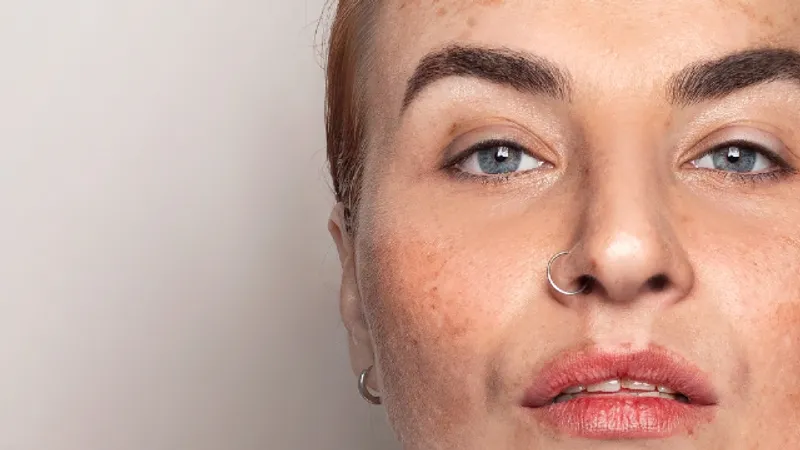
What the treatment is actually described as doing
The clinic's own language is precise, and worth reading in full rather than summarized.
The Melasma Brightening Injection is designed to inhibit melanin production and brighten the skin tone. It may also support skin elasticity and regeneration by promoting collagen synthesis. It may help improve freckles, blemishes, pigmentation, skin dullness, inflammation, and oxidative stress.
Every verb there is about influence rather than elimination. Inhibit. Brighten. May help improve. Melanin production is being turned down where it is overactive; the cells that produce melanin remain exactly where they were.
Which is why the effect depends on continuing. Turn the influence off and the process it was influencing resumes.
The clinic's list of potential benefits repeats the same register: it may help inhibit melanin production, brighten skin tone, improve freckles, blemishes and pigmentation, soothe irritation through anti-inflammatory effects, and provide antioxidant action. The U.S. National Library of Medicine keeps general background on this whole family of conditions at MedlinePlus on skin pigmentation disorders, and on antioxidants as a category.
Who the clinic describes as candidates, and what that reveals
This is the second piece of evidence, and it is more telling than the first.
The clinic's candidate list names four groups:
Those with epidermal or mixed melasma for whom laser treatment was ineffective
Those seeking alternatives because their skin has become sensitive due to frequent laser procedures
Those with post-inflammatory hyperpigmentation
Those wanting to improve an overall dull and uneven skin tone
Look at the first two. Both describe people who have already tried something else — and in the second case, people whose skin has been affected by how much they tried.
A treatment whose documented candidate list is partly composed of people for whom a different treatment did not work is a treatment operating in a difficult area. That is not a criticism of the injection; it is a description of the condition. Pigmentation of this kind is persistent enough that a clinic's honest candidate list includes the people other approaches did not resolve.
If you are in group one or two, this treatment is aimed squarely at you. If you are approaching pigmentation for the first time, it is worth knowing that you are entering a category where that list exists.
What a realistic outcome looks like
The clinic's word is satisfactory, and it is a fair one.
Realistically, that means lighter rather than absent, more even rather than uniform, and improved over a course rather than after a visit. Whether that is worth a course of five to ten sessions is a judgment only you can make, and it is a much easier judgment to make honestly before starting than at session three.
The single most useful preparation is a photograph. Take one in consistent light before the first session and repeat it at the same time of day. Gradual change over weeks is exactly the kind of change that memory reports badly, in both directions — people conclude nothing is happening, and people conclude more has happened than has.
The course, and what it means for a trip
Five to ten sessions at one-to-two-week intervals. At the shortest reading that is five weeks; at the longest, twenty.
For an international patient that arithmetic settles the question of what a visit to Korea can achieve here: a session, or perhaps two, not a course. The clinic's own description of the treatment assumes consistency across weeks, and a single session is not the thing it describes.
That does not make one session pointless, but it should be chosen knowingly. If you are in Seoul for other treatment and want to begin something you will continue at home, say so — where and how you continue is part of the plan, and a clinician who knows that will say different things than one who assumes you will be back in a fortnight. The clinic's contact page is the route for raising it in advance.
What the session involves
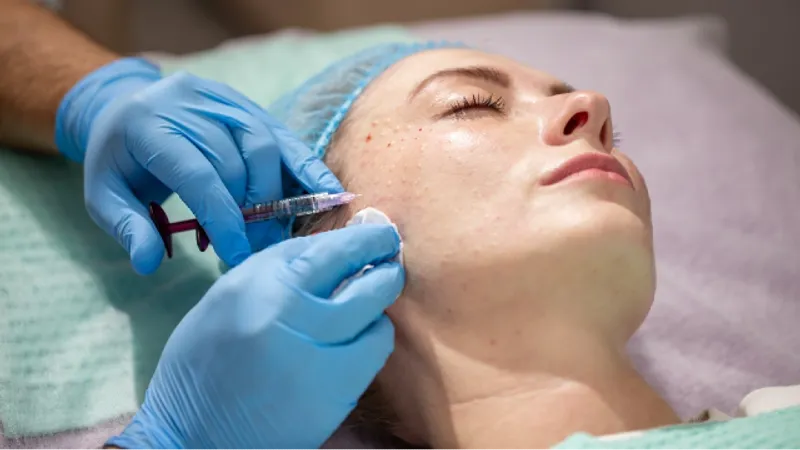
Brief and straightforward.
The skin is assessed and prepared. The selected injection solution is administered into the targeted skin areas using an appropriate injection technique. The treated area is then checked.
Comfort: topical numbing cream.
Recovery: patients can resume their daily activities immediately after the procedure.
The consultation beforehand assesses your pigmentation concerns, skin condition, medical history, previous treatments and treatment goals, and the practitioner determines whether the injection is appropriate and plans the treatment according to your skin.
Previous treatments belongs on that list for the reason described above. What has already been done to the skin — particularly repeated laser work — changes what should be done next.
Risks, and who should wait
Possible temporary effects are those of injectable skin treatments generally: redness, swelling, tenderness, bruising, or mild irritation at the injection sites. The clinic notes that rare complications can occur depending on the ingredients and injection technique, and that individual risks should be discussed with the practitioner.
Treatment may need to be postponed or avoided with active skin infections, significant skin irritation, known allergies to the treatment ingredients, or certain medical conditions. Suitability is determined at a medical consultation. Background at MedlinePlus on allergy and skin conditions.
Beforehand, tell the practitioner about your medical history, allergies, medications, previous pigmentation treatments and current skin condition, and arrive with skin that is clean and free from significant irritation.
The part that decides the result, and it is not the injection
The clinic's aftercare includes keeping the treated area clean, avoiding excessive rubbing or irritation, following any skincare instructions — and protecting the skin from sun exposure.
That last item is not a routine addition. For pigmentation of this kind, sun exposure is the variable most capable of undoing a course of treatment, and it operates between every pair of sessions and for as long afterward as you care about the result. MedlinePlus covers it at sun exposure.
Put bluntly: a course of five to ten injections without daily sun protection is a course being worked against. If you are going to do one, do the other.
This is also the honest reason the original question has the answer it has. A treatment can reduce pigment production for a period. It cannot change the fact that the skin will keep meeting the thing that drives it. What you are choosing is management — and management, done properly, is a reasonable thing to choose. The clinic's about page shows the other pigmentation services it runs alongside this one.
The Bottom Line
The clinic never describes this treatment as a cure. It describes satisfactory results from consistent treatment 5 to 10 times at 1-to-2-week intervals.
What it is documented to do is inhibit melanin production and brighten skin tone — influence on a process, not removal of the cells that drive it.
Its candidate list includes people for whom laser was ineffective and people whose skin became sensitive from frequent laser procedures, which says something about the condition's persistence.
A visit to Korea can deliver a session, not the course. Plan where the rest will happen.
Sun protection between and after sessions is the variable most capable of undoing the result.
Frequently Asked Questions
Can melasma be cured with this injection?
No. The clinic describes satisfactory results from a course of 5 to 10 treatments at 1-to-2-week intervals, and does not describe a cure.
What does the treatment actually do?
It is described as inhibiting melanin production and brightening skin tone, and may support elasticity and regeneration through collagen synthesis.
How many sessions will I need?
The clinic states that satisfactory results can usually be achieved with consistent treatment 5 to 10 times at intervals of 1 to 2 weeks, with individual variation.
Is it for people who have already tried lasers?
Partly. Its candidate list includes people with epidermal or mixed melasma for whom laser treatment was ineffective, and people whose skin became sensitive from frequent laser procedures.
Is there downtime?
The clinic states that patients can resume daily activities immediately after the procedure. Topical numbing cream is used for comfort.
What should I avoid afterward?
Excessive rubbing or irritation of the area, and sun exposure — which is the factor most able to undo the effect of a course.
Can I complete a course during a trip to Korea?
Not realistically. Five to ten sessions at one-to-two-week intervals runs from five to twenty weeks, so plan where the remainder will happen.
This article is for general informational purposes and does not constitute individualized medical advice. It is not a self-diagnosis tool. Whether this treatment suits your pigmentation can only be determined through a consultation with a qualified dermatologist or other appropriately qualified clinician who has examined you in person.
Academic & Clinical Sources
- MedlinePlus — Skin Pigmentation Disorders
- MedlinePlus — Sun Exposure
- MedlinePlus — Antioxidants
- MedlinePlus — Skin Conditions
- MedlinePlus — Allergy
- MedlinePlus — Skin Aging
- MedlinePlus — Talking With Your Doctor
Ready for Your Personalized Aesthetic Consultation in Hongdae?
Located right at Hongik Univ. Station Exit 1 (8F, 151 Yanghwa-ro, Mapo-gu). Multilingual coordinators for English, Traditional Chinese, and Simplified Chinese patients.