Hongik Univ. Station Exit 1 · 8F · 1:1 Personalized Aesthetic Dermatology
en-US

Does Ultherapy Hurt? What Patients Should Know First
The comfort claims are about how fast the energy arrives, not about less of it. Why session length matters more than intensity, and what to ask about.
Does Ultherapy Hurt? What Patients Should Know First
Medically reviewed by Dr. Chae-ho Lee, Medical Director, Doctorpetit Clinic Hongdae
Yes, you will feel it — and the useful question is not whether, but for how long.
That reframing is worth making at the start, because it changes what you should be asking. Doctorpetit Clinic Hongdae describes Ultherapy PRIME as a session usually requiring 30 to 60 minutes, which is the longest published session length across its eight non-surgical lifting services. Its other treatments in the same category run from ten minutes to forty.
A sensation you would describe as brief and tolerable in a fifteen-minute treatment is a different experience over an hour. Duration is the variable most people underestimate, and it is the one nobody asks about.
What the clinic does for comfort
Two things, and they work differently.
Topical numbing cream is applied before the procedure.The system delivers energy faster, which the clinic describes as reducing overall treatment discomfort.
Read that second one carefully, because it is the more informative of the two and it is easy to misread as a claim about intensity.
Faster delivery does not mean less energy. It means the same work is done in fewer minutes, so the total time you spend feeling it is shorter. That is a genuine improvement in the experience and it is an honest way to describe one — but it is a statement about exposure, not about the treatment being gentle.
The numbing cream is the part that reduces what you feel. The delivery speed is the part that reduces how long you feel it.
Why a treatment like this is felt at all
Worth understanding, because it makes the sensation legible rather than alarming.
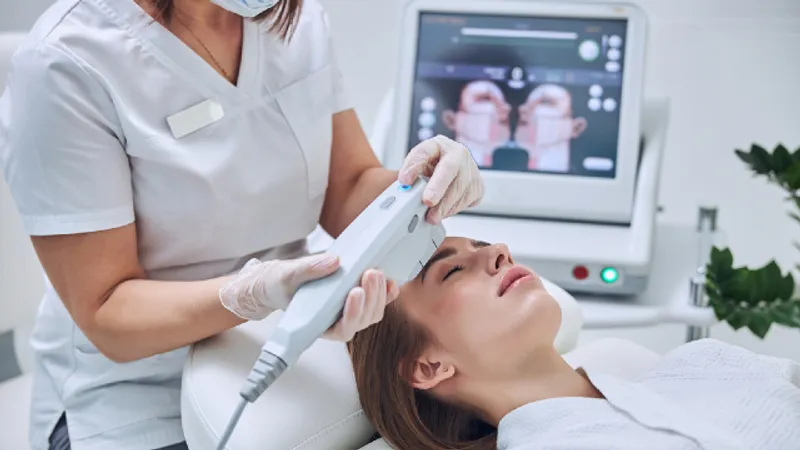
The clinic describes Ultherapy PRIME as a micro-focused ultrasound treatment that targets deep structural layers of the skin to stimulate collagen production and tighten sagging tissue. Focused ultrasound brings sound energy to a point at a chosen depth, heating a small volume of tissue there.
Heat at depth is felt as heat at depth. That is the treatment working, and a version of it you could not feel at all would be a version delivering less energy where it is aimed.
Patients commonly describe brief warmth or a prickling sensation arriving in pulses rather than continuously, which follows from how the energy is delivered. It is not constant, and it is not the same at every point on the face — bonier areas are generally felt more.
What to expect afterward, which is mild
The discomfort is during, not after.
The clinic's stated effects are temporary redness, minor swelling, slight bruising, or mild tenderness in the treated area, typically disappearing within several days. Recovery is described as zero to minimal downtime, with an immediate return to daily activities and travel.
So the trade is a demanding hour for an undemanding aftermath. That is the opposite shape from most treatments, and it is worth knowing when you plan the day: you will want the appointment itself to be unhurried, and you will not need the rest of the day to be.
Aftercare is straightforward — daily sunscreen, keeping the skin well hydrated, and avoiding hot saunas, steam rooms or strenuous exercise for 24 to 48 hours. General background on sun protection is at the U.S. National Library of Medicine's MedlinePlus page on sun exposure.
Four things that change your experience
None of these is about pain tolerance, and all four are askable.
How much numbing time you actually get. Topical cream needs time to work. If the schedule is tight, that time is the first thing to get compressed. Ask how long before the energy starts.
Which areas are being treated. Some parts of a face are more sensitive than others, and a treatment covering more area takes longer and includes more of the sensitive parts.
Your own state on the day. Tired, underslept and caffeinated is a worse baseline than rested, and for someone who has just flown from the United States that is a real consideration. This is an argument for not booking the treatment for the morning after a long-haul arrival.
Whether you tell them. This is the one patients skip. The clinic's comfort protocol exists, and saying that a particular area is too much is information a clinician can act on. Silence is not stoicism; it is withholding the one input they cannot see.
What the assessment establishes first
Before any of this matters, the treatment has to be right for you.
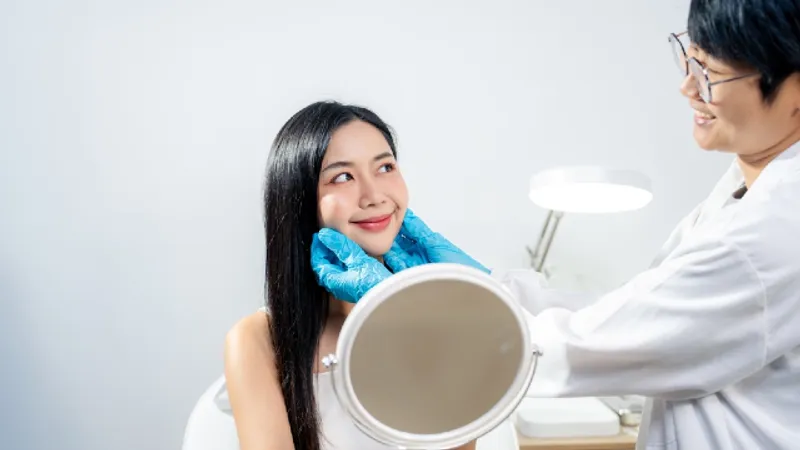
The clinic describes a one-to-one consultation assessing facial structure, skin laxity and goals. Its candidate description names mild to moderate skin laxity, sagging jowls, loss of jawline definition, fine lines around the eyes, or early signs of aging.
And its exclusions are specific: people with severe skin laxity requiring open surgery, active skin infections, open wounds, metallic implants in the treatment zone, or who are pregnant, are not suitable candidates.
That implant item is worth surfacing early rather than late. If you have metal anywhere in the treatment area — dental or otherwise — say so at the start of the consultation.
The timeline, so you know what the hour buys
The clinic describes initial subtle contraction that can be seen early, with the principal collagen remodeling occurring gradually over 2 to 3 months, and results lasting up to 12 months or longer depending on individual skin condition.
That matters to the pain question in a specific way. You are being asked to tolerate an hour now in exchange for something that arrives over a season. There is no version of the experience where the discomfort and the reward arrive close together, and anyone weighing the first should be weighing it against the second rather than against how they feel on the way out.
If you are traveling for this, it also means you will not know how it went while you are still in Seoul. Agreeing in advance how to reach the clinic afterward — its contact page is the route it names — is worth doing before you fly. The clinic's about page shows the other lifting services, several of which use no numbing at all, if the comfort question turns out to be the deciding one for you.
So: does it hurt?
It is felt. Numbing cream is applied beforehand, the energy is delivered quickly to shorten exposure, and the session runs 30 to 60 minutes — longer than anything else in the clinic's lifting category.
Most people describe it as tolerable and are glad it is over. Few describe it as comfortable, and a clinic promising comfortable would be promising something the mechanism does not support.
The realistic framing: an uncomfortable hour, a mild few days, and a result that shows up two to three months later. If that trade sounds acceptable, the discomfort will not be the thing you remember. If it does not, say so at the consultation — there are other services on the menu, and being told which ones is a better outcome than gritting through the wrong one.
The Bottom Line
You will feel it. The clinic applies topical numbing cream beforehand and describes faster energy delivery as reducing overall discomfort.
Faster delivery shortens exposure rather than reducing energy — a statement about time, not about gentleness.
Session length is 30 to 60 minutes, the longest among this clinic's eight lifting services, which makes duration the variable most people underestimate.
Afterward is mild: temporary redness, minor swelling, slight bruising or tenderness, typically gone within several days, with zero to minimal downtime.
Exclusions include metallic implants in the treatment zone, severe laxity requiring surgery, active infection, open wounds and pregnancy.
Frequently Asked Questions
Does Ultherapy PRIME hurt?
It is felt. The clinic applies topical numbing cream before the procedure and describes its energy delivery as faster, which reduces how long the sensation lasts rather than the energy delivered.
How long is the session?
Usually 30 to 60 minutes — the longest published session length among this clinic's non-surgical lifting services.
What does it feel like?
Heat delivered at depth, in pulses rather than continuously, and felt more over bonier areas. That sensation is the energy reaching the layer it is aimed at.
Is the numbing cream enough?
It reduces what you feel. Ask how long before the energy starts, since topical numbing needs time and a tight schedule can compress it.
How do I feel afterward?
Mild. The clinic names temporary redness, minor swelling, slight bruising or tenderness, typically disappearing within several days, with zero to minimal downtime.
Can I do anything to make it easier?
Arrive rested rather than the morning after a long flight, allow full numbing time, and tell the clinician when an area is too much — that is information they can act on.
When will I see the result?
Initial subtle contraction can be seen early, with the principal collagen remodeling developing over 2 to 3 months and results lasting up to 12 months or longer.
This article is for general informational purposes and does not constitute individualized medical advice. It is not a self-diagnosis tool. Whether this treatment suits your skin can only be determined through a consultation with a qualified dermatologist or other appropriately qualified clinician who has examined you in person.
Academic & Clinical Sources
- MedlinePlus — Anesthesia
- MedlinePlus — Pain Relievers
- MedlinePlus — Skin Aging
- MedlinePlus — Sun Exposure
- MedlinePlus — Bruises
- U.S. Food and Drug Administration — Aesthetic (Cosmetic) Devices
- MedlinePlus — Talking With Your Doctor
Ready for Your Personalized Aesthetic Consultation in Hongdae?
Located right at Hongik Univ. Station Exit 1 (8F, 151 Yanghwa-ro, Mapo-gu). Multilingual coordinators for English, Traditional Chinese, and Simplified Chinese patients.