Hongik Univ. Station Exit 1 · 8F · 1:1 Personalized Aesthetic Dermatology
en-US

Facial Vector Mapping: How an Injectable Plan Is Made
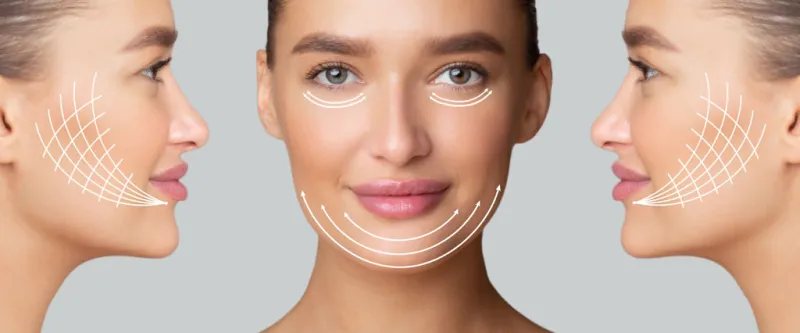
Facial vector mapping means deciding direction and depth before placement. Here is how assessment, anatomy and a one-to-one consult shape an injection plan.
Facial Vector Mapping: How an Injectable Plan Is Made
Medically reviewed by Dr. Chae-ho Lee, Medical Director, Doctorpetit Clinic Hongdae
Facial vector mapping is a phrase that sounds like equipment and is actually a way of thinking. A vector has a direction and a magnitude, so to describe an injection plan in vectors is to say that each placement has a direction it pulls or supports in, an amount, and a depth it acts at — and that these are decided before the needle is chosen, not improvised at the skin. Doctorpetit Clinic Hongdae describes precise one-to-one facial vector mapping and tailored multi-depth shot customization among its techniques. This article unpacks what that kind of planning consists of, so that a patient can recognize it, question it, and tell it apart from a menu.
A vector, on a face, is a direction plus an amount
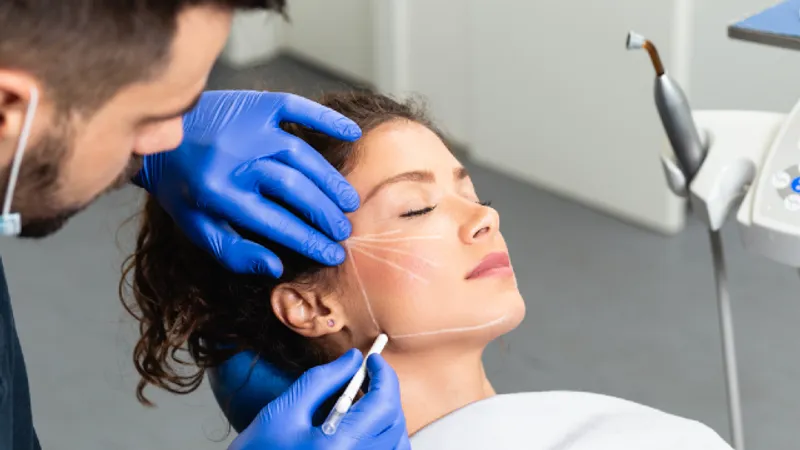
Ordinary language about injectables is positional: cheeks, under the eyes, jawline. Vector language is different, because it asks what each placement is supposed to do.
Consider the difference between adding volume in the middle of a flat area and placing support at a specific point so that the tissue above it sits differently. The first describes a location. The second describes a location, a direction of effect, and a quantity — and those three together are what make a plan reproducible and explainable.
The clinic's own service descriptions move between the two registers in a way that is worth noticing. Its Point Lifting / Contour Filler is characterized by the placement of filler at selected points to supply volume and support, with definition and overall balance given as the aim rather than bulk in a region. The name itself is the argument: points, not areas filled in.
The clearest example on the clinic's menu involves measuring first
For a plain illustration of what mapping means in practice, look away from the face for a moment.
The clinic describes its shoulder filler as a procedure that injects hyaluronic acid filler into points on both shoulders while calculating angles and comparing neck length and collarbone symmetry, adding volume at those points to create a soft, straight shoulder line. Its stated design process takes in neck length, collarbone symmetry, shoulder angles and the overall upper-body line.
That sentence contains the entire logic in miniature. Before anything is placed, four measurements are taken, and they are relational rather than absolute — the question is not how long a collarbone is but how the two sides compare. The placement that results is a consequence of the measurements. If the measurements were different, the placement would be.
Ear filler shows the same thinking at a smaller scale. The clinic describes delicate, point-by-point volume control for natural-looking ear contours, with the clinician assessing ear anatomy, goals and medical history before recommending treatment. Again: anatomy first, points second.
Apply the same approach to a face and you have what the clinic calls vector mapping — asymmetries noted, relationships compared, points chosen because of what the comparison showed.
Depth is the second coordinate, and it is not interchangeable with position
The phrase "multi-depth" is doing real work. Two injections at the same surface point but at different depths are different treatments.
The clinic's own menu demonstrates this better than any explanation. Its Skin Botox is described as small amounts of botulinum toxin injected evenly into the shallow layers of the skin rather than directly into facial muscles, aimed at pores, fine lines, elasticity and sebum. Its Wrinkle Botox places a small amount into targeted facial muscles to reduce excessive movement. Same substance, same face, different layer — and the clinic treats them as separate services with separate indications, separate timelines and separate candidate lists.
The clinic adds a detail that sits between the two. For the cheek and jawline region at its Hongdae location, it describes skin-layer placement chosen to work on elasticity and on muscle relaxation at the same time — one depth selected because it serves two goals in that particular area. That is a layer decision driven by region and objective rather than by habit.
Fillers add a third axis. The clinic notes for shoulder filler that hyaluronic acid fillers or biocompatible collagen-stimulating injectables are placed into targeted soft-tissue layers using fine needles or blunt-tip cannulas, with appropriate filler formulations selected. Needle or cannula, firm product or soft, shallow or deep — these are planning decisions, and they are made together rather than one at a time.
Why anatomy decides depth before aesthetics get a vote
There is a reason depth is not purely an aesthetic choice, and it is the part of this subject that published anatomical research addresses most directly.
A cadaveric anatomical study published in the journal Diagnostics mapped the sub-SMAS spaces of the face — compartments bounded by fat, muscle, fascia and retaining ligaments — and identified them as comparatively safe planes in which to place filler, concluding that accurately identifying those spaces is what allows a clinician to work while reducing the risk of damaging the structures around them. Its authors also observe that thicker, more robust skin, as is common in East Asian patients, calls for deeper placement, so the same aesthetic goal does not imply the same depth in every face.
The FDA states the consequence of getting that wrong in plain terms: it describes accidental injection into a blood vessel as the most serious risk associated with dermal fillers, with possible results including death of tissue, stroke and blindness.
The practical consequence for a patient is simple. When a clinician tells you that a particular concern needs to be approached at a particular depth, or from a particular angle, or with a cannula rather than a needle, that is not stylistic preference. It is anatomy constraining the options before aesthetics narrows them further.
The FDA's consumer guidance on dermal fillers reinforces the same point from the regulator's side, advising patients to work with a licensed health care provider experienced in dermatology or plastic surgery and trained to inject fillers, using properly labeled, sealed product.
Inside the one-to-one consultation
Mapping is not a separate appointment. It happens inside the consultation, and the clinic describes that consultation as its central commitment: a stated one-to-one principle in which the Medical Director listens to each patient's individual concerns and needs before recommending a treatment plan.
What gets reviewed is more than the face. Across its injectable services the clinic lists the following as part of consultation and assessment:
The patient's concerns, goals and expectations.
Medical history, current medications and supplements, and allergies.
Previous aesthetic treatments, including previous botulinum toxin treatments and reactions.
Facial anatomy and the specific treatment area.
Muscle activity or facial movement, where relevant to the treatment.
Skin condition and elasticity.
For filler dissolving, what filler was previously injected, where, and when.
Several of those items have nothing to do with appearance and everything to do with whether a given placement is appropriate at all. A medication that increases bruising changes the plan. An infection or significant inflammation at an intended injection site, which the clinic lists as a reason to postpone, removes that site from the map entirely.
Dr. Chae-ho Lee's stated philosophy emphasizes natural-looking results, individualized one-to-one consultations and personal treatment planning, and the clinic states that it provides one-to-one customized treatment considering individual skin condition and elasticity, using certified genuine products according to the indicated dosage. His profile is on the clinic's doctors page.
What a map does to a plan: usually, it makes it smaller
A common misunderstanding is that detailed planning produces more treatment. It often produces less.
If placement follows from assessment, then anything the assessment does not support drops out. The clinic's description of its Masseter Botox consultation makes the mechanism visible: it notes that possible combinations depend on whether the concern involves muscle bulk, fat, skin laxity or volume. Four different causes can produce a similar-looking lower face, and only one of them is treated by reducing muscle activity. An assessment that identifies the cause as something else does not produce an additional treatment — it removes an inappropriate one.
The clinic's broader framing points the same way. It describes focusing on natural, harmonious changes and maintaining the patient's individual appearance, and states that its techniques are designed to deliver natural, un-overdone facial proportions. Those are statements about restraint rather than volume.
For patients, this is the most useful way to test whether a plan was mapped: ask what was considered and rejected. A plan arrived at by assessment has rejected things.
How a mapped plan sounds when it is explained back to you
You will not see the map. What you can evaluate is the explanation, and a plan built from assessment tends to have recognizable features.
Each element is tied to a finding. Not "filler for the cheeks" but what was observed, and what the placement is meant to do about it.
Asymmetry is mentioned. Faces are not symmetrical, and an assessment that compared the two sides will have noticed.
Depth or layer is named, at least in plain terms. Surface, under the skin, into the muscle.
Sequence and timing are specified where more than one thing is proposed.
Limits are stated. What this will not change, and what would be needed for that.
An alternative was considered. The clinic's own material lists alternatives for most of its services — energy-based treatments, skincare, peels, other injectables, and in some cases surgery.
The clinic also notes that U.S. patients commonly arrive with a specific concern: whether the consultation will produce individual recommendations rather than a standard treatment plan, and whether the doctor will consider facial proportions, skin condition, elasticity and individual anatomy. Those are exactly the right things to be listening for.
The American Academy of Dermatology publishes a list of questions worth asking before any cosmetic procedure — among them what the risks are, what results are realistic, and how to prepare and care for the skin afterward. Its safety guidance supplies the framing that applies here: a treatment that looks straightforward still depends on detailed medical understanding of the skin and the tissue underneath it, so asking how a decision was reached is reasonable rather than a challenge to the clinician.
Photographs, online consultation, and where they stop

International patients reasonably want to start before they land, and the clinic supports that. For both Wrinkle Botox and Skin Botox it states that photographs or an online consultation may help with preliminary discussion, while recommending an in-person assessment before treatment. Its online consultation route runs through its contact page, and English consultation and interpretation support are available.
The limit is worth understanding rather than resenting. A photograph records a surface at one instant. It does not show how tissue moves when the face does, how skin behaves when it is lifted or pressed, or how elastic it is — and skin condition and elasticity are named inputs in the clinic's own assessment for its filler services. Muscle activity, likewise, is assessed by watching movement rather than by reading a still image.
So a photograph is useful for establishing whether a concern is in scope and what a conversation should cover. It is not where the map is drawn.
The map is not permanent
Two things change it.
The first is time. The clinic's botulinum toxin material notes that a follow-up may be considered at around two weeks — which is also when it describes effects as most noticeable. That interval exists because the result of a plan is information about the plan. What the face does in response to a given placement at a given depth informs the next one.
The second is you. The clinic's documentation repeatedly places expectations among the things assessed, and patient goals are not fixed. A plan made when the concern was texture is not the plan for a concern that has become contour.
This is why records matter more than most patients expect. Knowing what was used, where, how much, and at what depth is what makes the next consultation a continuation rather than a restart — and for an international patient treated once a year, that record may be the only continuity there is. The clinic's main site lists the contact routes for requesting it.
Where this kind of planning applies least
Honesty about scope is part of the subject. Vector-style planning is most meaningful where placement is individual and directional — contour filler at chosen points, shoulder and ear filler designed from measurements, botulinum toxin placed by muscle and by layer.
It is less meaningful for treatments where the device, rather than the hand, determines distribution. The clinic's non-surgical lifting services are described as selecting an appropriate energy-based device after assessing facial structure and skin laxity; there the individual decision is largely which device, at what setting, over which area. Its laser and skin-rejuvenation services work similarly.
Both approaches are legitimate. They are simply not the same kind of decision, and a clinic describing every treatment it offers in the language of individual mapping would be stretching the term past usefulness.
The Bottom Line
A vector adds direction and amount to position, so vector-style planning asks what each placement is meant to do rather than only where it goes.
The clinic's shoulder filler is the clearest published example: angles, neck length and collarbone symmetry are compared before points are chosen.
Depth is a separate decision from position — the clinic's Skin Botox and Wrinkle Botox use the same substance at different layers and are treated as different services.
Published anatomical research identifies particular facial planes as comparatively safe for placement and treats accurate identification of them as central to safe injection, which is why depth is constrained by anatomy before aesthetics.
A plan built from assessment is recognizable: each element is tied to a finding, limits are stated, and something was considered and rejected.
Frequently Asked Questions
Is facial vector mapping a machine or a scan?
It describes a way of planning rather than a device. The elements that make it concrete — comparing the two sides, choosing points rather than regions, and deciding the depth for each placement — are clinical judgments made during assessment.
How is this different from just having a consultation?
It is what a thorough consultation produces. The distinction worth caring about is between a plan whose elements each answer a specific finding and a plan assembled from what the patient asked for by name.
Why does injection depth matter so much?
Because different tissue sits at different depths and does different things. The clinic treats the shallow skin layer and the muscle layer as separate services with separate indications, and published anatomical research describes facial compartments and the structures bordering them as what determines where product can safely be placed.
Can my plan be made from photographs before I travel?
Partly. The clinic states that photographs or an online consultation may help with preliminary discussion while recommending in-person assessment before treatment. Skin elasticity and muscle movement, both named inputs in its assessments, cannot be judged from a still image.
What should I bring to the consultation?
A list of your medications and supplements, your allergies and relevant medical conditions, and details of any previous injectable treatments, including what was used and when. For prior filler, the clinic specifically notes that the type, location and approximate date of previous treatment matter.
Does a detailed plan mean more treatments?
Not usually. Assessment removes options as well as adding them — it identifies when a visible concern has a cause that the requested treatment would not address, and the clinic's stated emphasis is on natural, un-overdone proportions.
Will the plan be the same next time?
It should not be, automatically. The clinic describes a follow-up consideration at around two weeks for botulinum toxin, which is when effects are most noticeable, and a result is information for the next plan. Keeping a record of what was placed where makes that continuity possible.
Does this apply to laser and lifting treatments too?
Less directly. For its non-surgical lifting services the clinic describes assessing facial structure and skin laxity in order to select an appropriate energy-based device, which is an individual decision of a different kind — device and setting rather than point and depth.
This article is for general informational purposes and does not constitute individualized medical advice. It is not a self-diagnosis tool. An injection plan for your own face can only be determined through a consultation with a qualified dermatologist or other appropriately qualified clinician who has examined you in person.
Academic & Clinical Sources
- Diagnostics — Safe Zones for Facial Fillers: Anatomical Study of SubSMAS Spaces in Asians
- FDA — Dermal Filler Do's and Don'ts
- FDA — FDA-Approved Dermal Fillers
- American Academy of Dermatology — Questions to Ask Before a Cosmetic Procedure
- American Academy of Dermatology — Cosmetic Treatment Safety
Ready for Your Personalized Aesthetic Consultation in Hongdae?
Located right at Hongik Univ. Station Exit 1 (8F, 151 Yanghwa-ro, Mapo-gu). Multilingual coordinators for English, Traditional Chinese, and Simplified Chinese patients.