Hongik Univ. Station Exit 1 · 8F · 1:1 Personalized Aesthetic Dermatology
en-US

Hyperhidrosis Botox: Can It Stop Sweating Permanently?
No. Hyperhidrosis Botox is not permanent: the nerve block is reversible. Doctorpetit Clinic Hongdae reports roughly 3 to 6 months of effect per session.
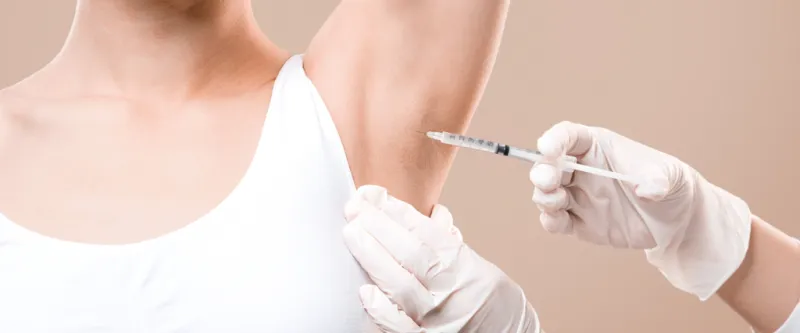
Hyperhidrosis Botox: Can It Stop Sweating Permanently?
Medically reviewed by Dr. Chae-ho Lee, Medical Director, Doctorpetit Clinic Hongdae
No. A hyperhidrosis Botox permanent result is not something the treatment is built to produce, and the clinic says so in the place that matters most. Doctorpetit Clinic Hongdae writes the limitation directly into its candidacy criteria rather than into a footnote: suitable candidates should expect temporary reduction rather than a permanent cure, with sweat reduction maintained for roughly three to six months per session. The interesting question is therefore not whether the sweating stops forever, but what the repeating cycle looks like, why the effect expires on the schedule it does, and what would physiologically have to be true for "permanent" to be available at all.
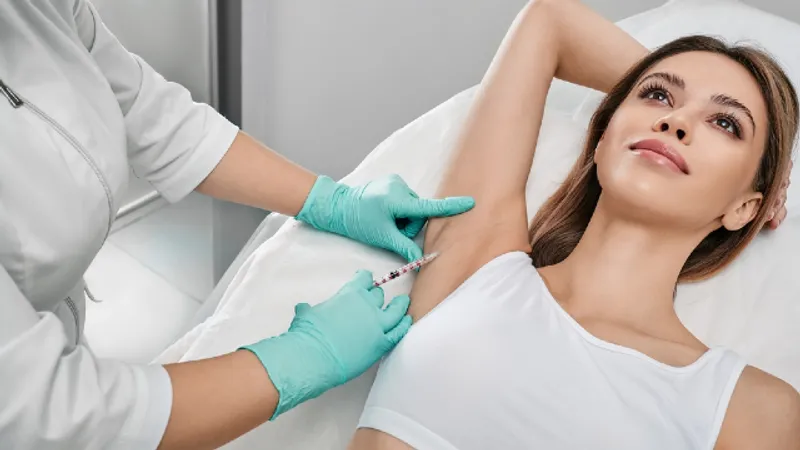
What "permanent" would actually require
Think about where the treatment lands. The clinic's own account of the mechanism is that botulinum toxin temporarily blocks the nerve signals that stimulate sweat glands, lowering sweat production in the treated area.
The International Hyperhidrosis Society, a nonprofit medical organization, describes the same event from the chemistry side: onabotulinumtoxinA temporarily interrupts the chemical messenger that switches sweat glands on, and the injections are placed very shallowly, just under the skin surface, where the medicine stays.
Nothing in either description removes anything. The gland is intact. Its nerve supply is intact. What has changed is that one message is not arriving for a while.
So a genuinely permanent result would require a different category of intervention altogether — one that destroys the glands in the treated zone or permanently interrupts the nerve traffic feeding them. Those interventions exist, and they carry a different balance of consequences, which is the subject of a later section. A reversible chemical block is not one of them, and no dose or technique converts it into one.
Why the effect expires: the block is designed to lift
The U.S. National Library of Medicine's MedlinePlus drug entry for onabotulinumtoxinA injection classifies it among the neurotoxins and describes it as working by blocking the nerve signals that drive the targeted activity. That blockade sits on machinery the nerve ending needs in order to release its signaling chemical — and the nerve ending rebuilds that machinery.
Rebuilding is not instant, which is why the useful window is counted in months. Rebuilding is also not optional, which is why the window closes.
That is the entire explanation for the duration figures people compare online. They are not measuring how strong a product is. They are measuring how long it takes a particular patch of treated tissue to restore its own signaling.
A 2013 review in the journal Toxins by Lakraj, Moghimi and Jabbari, which surveyed the world literature on hyperhidrosis treatment, put the practical result plainly: botulinum toxins provide a long-lasting effect of three to nine months after a single injection session. Long-lasting, and finite.
The timeline Doctorpetit Clinic Hongdae publishes
The clinic's figures for its Hyperhidrosis Botox service are specific enough to plan around.
Sweat reduction begins gradually 3 to 7 days after treatment.
Maximum effect arrives at around one month.
Results are maintained for approximately 3 to 6 months, with individual variation.
The recommended treatment cycle is roughly every 3 to 6 months.
The appointment itself runs about 10 to 15 minutes, with same-day recovery.
Read those together and a pattern appears that catches first-time patients out: the gap between the injection and the peak is longer than the gap people expect, and the duration clock effectively starts before you have seen the full result. Judging a session at the two-week mark is judging it early.
Why the published durations disagree with each other
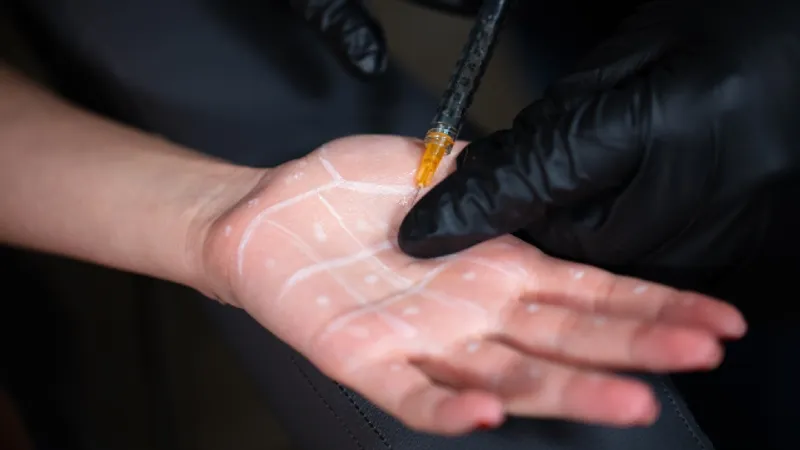
Three reputable figures, three different numbers. The clinic says three to six months. The Toxins review says three to nine. The International Hyperhidrosis Society's patient material says dryness typically lasts four to twelve months, and that some studies have found it can run longer still, alongside an 82 to 87 percent reduction in sweating when the underarms are treated.
These are not contradictions. They are different measurements.
Different areas. Underarm treatment and palm treatment do not behave the same way, and the pooled figures include both.
Different endpoints. "Duration" can mean the first return of any sweating, the return to the baseline a patient started from, or the point at which the patient asks for another session. Those three dates are weeks or months apart.
Different populations and doses. Research cohorts and clinic cohorts differ, and dose varies with the area and the severity being treated.
Genuine individual variation, which every one of these sources flags independently.
The sensible way to use the spread is to treat the clinic's three-to-six-month guidance as the planning assumption and anything beyond it as a welcome surprise rather than an entitlement.
What a year actually looks like
If you take the clinic's recommended cycle at face value, a treated year is two to four short appointments rather than one decisive event. Each is a ten-to-fifteen-minute visit with same-day recovery.
That reframing matters more than it sounds. People weighing this treatment often compare it mentally against a cure and find it wanting. The fairer comparison is against the alternative they are actually living with, where the problem is present every day rather than for a predictable gap between sessions.
Timing is the lever you control. Because full effect lands at about a month, a session scheduled four to six weeks before a summer, a wedding, a conference season or a job that matters is a session working at its peak when it is needed. A session booked the week before is not.
Does repeating it stop working?
The International Hyperhidrosis Society states that repeated treatment has been shown to be safe and effective for excessive sweating, with consistent improvements in symptoms, daily functioning and quality of life across published studies. The Toxins review similarly treats repeat injection sessions as the standard pattern of care rather than as an exception.
What does need repeating is the assessment, not just the injection. Doctorpetit Clinic Hongdae's own pre-treatment requirements ask patients to disclose medications, supplements, allergies, neuromuscular conditions and previous botulinum toxin treatments — and the exclusions it lists, including hypersensitivity to botulinum toxin or its ingredients, certain neuromuscular disorders, and infection or inflammation at the injection site, apply to every round, not only the first. Anyone pregnant or breastfeeding should raise it with a healthcare professional first, since the evidence base for elective use in that situation is thin.
Each cycle is a fresh decision. Treat it as one.
The options that do not expire, and what they cost you
The clinic's own list of alternatives for excessive sweating names topical antiperspirants, prescription topical treatments, oral medications, iontophoresis and, in selected cases, surgical treatment — with the appropriate choice depending on the severity, location and cause of the sweating.
The American Academy of Dermatology frames the same decision from the patient's side. It states that there is no single best treatment for hyperhidrosis, and that a dermatologist builds an individual plan around the type of hyperhidrosis diagnosed, the symptoms, where on the body the heavy sweating occurs, and the patient's own treatment preferences. The AAD also sets the goal in functional terms rather than absolute ones: reduce sweating enough that it no longer interferes with everyday life.
That last phrase is the real benchmark. "Permanent" is a property of an intervention. "No longer interfering" is a property of your week, and several routes reach it — some repeating, some not, each with its own trade.
One more point the AAD makes is worth carrying into any consultation: an accurate diagnosis comes first, because excessive sweating driven by a medication or another medical condition is managed differently from primary hyperhidrosis. Doctorpetit Clinic Hongdae says the same thing in its candidacy notes, flagging that a medical evaluation may be appropriate to establish which one you have.
Retreatment when the clinic is on the other side of the world
For an international patient, the temporary nature of the treatment is mainly a logistics problem rather than a clinical one.
The clinic states that same-day recovery is possible and that routine overnight hospitalization is generally not required for injectable treatment, while also noting that international patients should confirm their individual travel and follow-up arrangements. Because the peak lands at about a month, you will be home before you can fully assess the session — so it is worth agreeing in advance, through the clinic's contact page, what the follow-up route looks like and what counts as a normal residual level of sweating at the one-month mark.
The CDC's Yellow Book guidance on what to do when you become unwell abroad is a useful general reference for travelers arranging care across borders, particularly on keeping records of what was done so that any clinician you see later has them. Keeping the product name, the areas treated and the date is the practical version of that advice, and it also makes the next cycle easier to plan wherever you have it. The clinic's about page sets out how this service sits within its wider botulinum toxin menu.
The Bottom Line
Hyperhidrosis Botox is not permanent, and the clinic builds that expectation into its candidacy criteria rather than appending it as a disclaimer.
The block is placed on a reversible signaling step; the treated nerve endings restore their own function over months, which is why duration is measured in months.
Doctorpetit Clinic Hongdae reports onset at 3 to 7 days, maximum effect at around one month, results lasting approximately 3 to 6 months, and a cycle of roughly every 3 to 6 months.
Published durations vary because sources measure different areas, different endpoints and different doses — plan on the clinic's range and treat anything longer as a bonus.
Permanent-by-design options exist in the wider treatment menu, and the American Academy of Dermatology notes there is no single best treatment, only an individualized plan.
Frequently Asked Questions
Does hyperhidrosis Botox ever become permanent after enough sessions?
No. Each session places a reversible block on nerve signaling to the sweat glands in the treated area, and that block lifts as the nerve endings restore their function. Repeating sessions extends the period of reduced sweating; it does not convert the effect into a permanent one.
How long after treatment should I judge whether it worked?
Doctorpetit Clinic Hongdae reports that sweat reduction begins gradually within 3 to 7 days and reaches maximum effect at around one month. Assessing the result at two weeks means assessing it before it has fully arrived, which is a common source of unnecessary worry.
How often would I need to come back?
The clinic's recommended treatment cycle is approximately every 3 to 6 months, which works out to two to four short appointments across a treated year. Individual duration varies, so the interval is a planning assumption rather than a fixed schedule.
Why do some sources say Botox for sweating lasts a year?
Because they are measuring different things. The International Hyperhidrosis Society's patient material cites dryness typically lasting 4 to 12 months, a 2013 review in Toxins cites 3 to 9 months, and this clinic cites 3 to 6 months — figures that differ by treated area, dose, study population and how the end of the effect is defined.
Is repeat treatment safe over the long term?
The International Hyperhidrosis Society states that repeated treatment for excessive sweating has been shown to be safe and effective in published research, with consistent improvement in symptoms and daily functioning. Each round still requires a fresh review of medications, allergies and neuromuscular conditions.
What if I want to stop sweating in that area for good?
That is a different conversation, and it belongs in a consultation. The clinic's own list of alternatives includes topical and prescription antiperspirants, oral medication, iontophoresis and, in selected cases, surgical treatment, with the right option depending on severity, location and cause.
Does the treatment stop my body sweating everywhere?
No. The effect is local to the injected area, which is the point — sweating is how the body manages its temperature. The International Hyperhidrosis Society notes that localized sites such as the underarms account for only a small fraction of the body's sweat glands.
This article is for general informational purposes and does not constitute individualized medical advice. It is not a self-diagnosis tool. Whether excessive sweating needs medical evaluation first, and whether this treatment suits you, can only be determined through a consultation with a qualified dermatologist or other appropriately qualified clinician who has examined you in person.
Academic & Clinical Sources
- MedlinePlus: OnabotulinumtoxinA Injection
- American Academy of Dermatology: Hyperhidrosis Diagnosis and Treatment
- International Hyperhidrosis Society: OnabotulinumtoxinA Injections
- Toxins: Hyperhidrosis Anatomy, Pathophysiology and Treatment
- CDC Yellow Book: What To Do When Sick Abroad
- American Academy of Dermatology: Questions To Ask Before Treatment
Ready for Your Personalized Aesthetic Consultation in Hongdae?
Located right at Hongik Univ. Station Exit 1 (8F, 151 Yanghwa-ro, Mapo-gu). Multilingual coordinators for English, Traditional Chinese, and Simplified Chinese patients.