Hongik Univ. Station Exit 1 · 8F · 1:1 Personalized Aesthetic Dermatology
en-US

Non-Surgical Facial Lifting: A Guide for First-Timers
Four kinds of energy, one shared timetable, and a menu of eight. What a beginner actually has to decide before any device name becomes relevant at all.
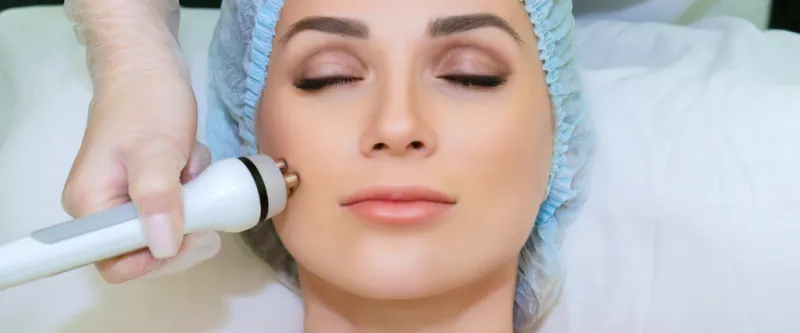
Non-Surgical Facial Lifting: A Guide for First-Timers
Medically reviewed by Dr. Chae-ho Lee, Medical Director, Doctorpetit Clinic Hongdae
If you have spent an evening reading about this, you have probably encountered eight device names, four acronyms and no way to rank them. That is a fair description of the category, and it is not your fault.
The problem is that the names are the last thing you need and the first thing you find. Almost every beginner's real decision happens before any device becomes relevant, and it has two parts: does this category address the thing I have, and am I willing to wait the way it requires. Get those right and the device selection is a clinical question that belongs to someone who has looked at your face.
So this guide works from the outside in.
What the category actually is
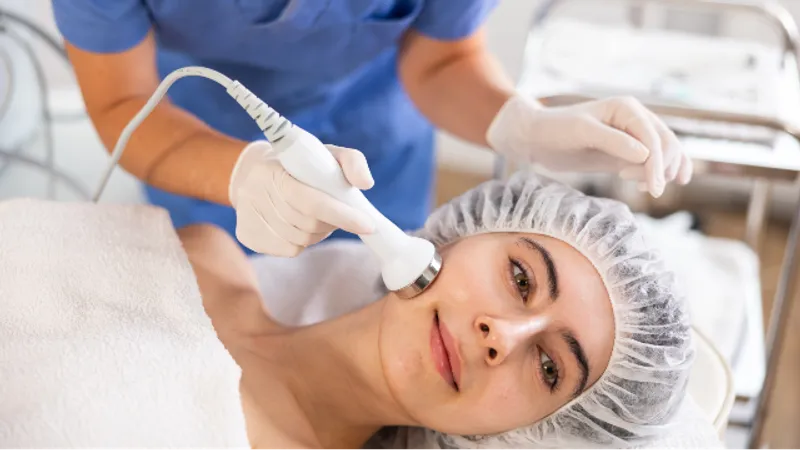
Doctorpetit Clinic Hongdae's definition of the category is that these are non-invasive procedures for sagging skin of the face and neck, done without incisions, which work by putting high-intensity focused ultrasound, radiofrequency or microwave energy into deep tissue layers to stimulate collagen production.
Two things in that sentence do the work.
Energy, delivered through the skin. Nothing is cut, and nothing is injected. A device puts energy into tissue at a chosen depth.
Collagen production, stimulated. The visible change is not the energy. It is what the body does afterward — which is why the timetable of this whole category looks the way it does, and why nobody in it promises you a result on the day.
Four kinds of energy, not three
The category is usually summarized as ultrasound, radiofrequency and microwave. On this clinic's menu there are four, because one of its lifting treatments uses laser light, and a beginner's guide that leaves it out will leave you confused when you see it listed.
Focused ultrasound. Sound energy brought to a focus at a chosen depth below the surface, heating a small volume of tissue there without doing the same to the skin above it. The clinic runs three: Ultherapy PRIME, which it describes as micro-focused ultrasound targeting deep structural layers; Shurink Universe, described as a second-generation focused ultrasound treatment delivering concentrated thermal energy to deep dermal and SMAS layers; and 10-THERA, described as using dual-line irradiation to reach the same layers.
Radiofrequency. Electrical energy that heats tissue through its own resistance, generally over a broader volume than a focused beam. The clinic runs DENSITY Lifting, described as delivering controlled RF energy to create controlled thermal stimulation; Oligio X, described as monopolar radiofrequency delivering thermal energy into the dermal layers; and InMode, which it describes as a dual-mode system where one mode applies electrical pulses aimed at fat cells and the other delivers thermal heat to stimulate collagen and elastin.
Microwave. ONDA Face Lifting, which the clinic describes as using ultra-high-frequency microwave technology to selectively target deep fat layers and stimulate dermal collagen without damaging surrounding tissue.
Laser. Titanium Lifting, described as emitting three wavelengths of diode laser energy to tighten facial tissue, stimulate collagen synthesis and improve skin tone brightness in a single session.
You do not need to retain that. What is worth retaining is the shape of it: different energy types reach different depths and affect different tissue, which is why a menu of eight is not a menu of eight equivalent options with different brand names on them.
What they all have in common
More than the marketing suggests, and this is the part that generalizes.
Candidacy is mild to moderate. Every one of these treatments, as this clinic describes it, is aimed at mild to moderate skin laxity, reduced elasticity, softening jawlines or early age-related change. Not one of them is described for severe sagging.
Severe sagging is excluded explicitly. The clinic states that individuals with severe skin sagging requiring surgical skin excision are generally not suitable candidates for non-surgical lifting, alongside active skin infections, open wounds, and pregnancy.
That pair of statements is the single most useful thing in this article. A beginner deciding whether to start here is really deciding whether their concern sits in the band this category addresses — and if it does not, no amount of comparing devices will change the answer.
The result is delayed, and the delay is the norm rather than a caveat. The clinic publishes collagen remodeling developing over roughly four to twelve weeks at the category level, and its individual treatments name peaks at two to three months, six to twelve weeks, one to two months, two to four weeks. Some describe an immediate contraction effect on the day, but every one of them describes the substantial change arriving later.
Downtime is minimal across the board. The clinic describes little or no downtime for the category, with most patients resuming daily routines immediately or within a day. Its stated temporary effects are mild redness, light swelling, temporary skin tightness or slight tenderness resolving within a few days.
Sessions are short. From roughly ten minutes to an hour, depending on the treatment and the area.
Where they differ in ways a beginner can use
Three practical differences, all of which you can ask about without knowing any physics.
Whether numbing is used. This varies genuinely and it is a reasonable thing to care about. The clinic describes applying topical numbing cream before Ultherapy PRIME, and a numbing ointment applied for twenty to thirty minutes before Shurink Universe. For several of its radiofrequency, microwave and laser treatments it states that no anesthesia or numbing cream is required, because the systems cool the skin surface during energy delivery. That difference also changes appointment length — twenty to thirty minutes of waiting is twenty to thirty minutes.
How long the result is described as lasting. The clinic publishes ranges of roughly six to twelve months for several of these treatments, up to twelve months or longer for one, and about six months for another. These are ranges rather than promises, and they vary with age, skin condition and lifestyle by the clinic's own account.
Whether repeat sessions are part of the plan. For its microwave treatment, the clinic describes repeat sessions every three to four weeks depending on goals. For others it describes a single session with the result developing afterward. That difference matters enormously for someone planning a trip, and it is the question most often asked too late.
The two decisions that are actually yours
Everything above is context. Here is what you are deciding.
One: is this the right category at all?
Non-surgical lifting addresses laxity — skin and underlying tissue that has loosened. It is not aimed at pigmentation, at texture, at volume that has been lost, or at lines produced by muscle movement. This clinic runs separate services for each of those, and a device that tightens will not do their job.
The honest test is to ask what you would point at. If you would point at your jawline giving way, or at the outline of your lower face softening, that is laxity. If you would point at a patch of discoloration, or at a hollow, or at a crease that appears when you frown, it is something else.
Underneath all of it is ordinary skin aging, driven considerably more by sun exposure than by anything a clinic sells — the U.S. National Library of Medicine's MedlinePlus material on skin aging and on sun exposure is the plainest summary of that, and daily sun protection remains the highest-return habit in this whole area.
Two: can you live with the timetable?
Read the delayed-result point again and ask yourself honestly what you are expecting.
If you are hoping to look different at a wedding in three weeks, this category will mostly disappoint you, because the substantial change is described as arriving one to three months out. If you are content to be treated now and see the result over a season, the timetable is not a drawback — it is simply what stimulating a slow biological process looks like.
Between the two questions, the second is the one more often answered carelessly. A patient can be assessed correctly, treated appropriately, and still be disappointed — because the result was judged at three weeks rather than at three months.
What a first consultation should do
The clinic describes a one-to-one consultation that analyzes facial structure, assesses skin laxity, discusses aesthetic goals, and then selects the device.
That ordering is the thing to check. A first-time patient who arrives asking for a named device has done the steps in the wrong order, and a clinic that agrees without assessing has done the same. The device is an output.
Reasonable questions for a beginner, none of which require expertise:
What did you find when you assessed my laxity, and is it in the band this category treats?Which energy type are you recommending, and what does it reach that another would not?When should I judge the result, and when should I stop expecting more?Is this one session or a course, and if a course, over what period?What would you suggest instead if I did nothing here?
You can start that conversation before you travel through the clinic's contact page, and the clinic's about page lists the full lifting menu alongside its other categories, which is useful context for the last question.

Before and after treatment
The clinic's preparation guidance for the category is to avoid strong chemical exfoliants and excessive sun exposure before the appointment, and to tell the medical team about recent aesthetic treatments.
Its aftercare is short: keep the skin hydrated, apply broad-spectrum sunscreen daily, and avoid excessive heat such as saunas and intense exercise for a few days.
Regulators publish general background on this class of device — the U.S. Food and Drug Administration keeps overview pages on aesthetic devices and on non-invasive body contouring technologies — and reading one of them before a consultation is a reasonable way to arrive with better questions.
The Bottom Line
Non-surgical lifting uses energy delivered through the skin to stimulate collagen; the visible change comes from the body's response rather than from the device.
This clinic's menu spans four energy types, not three: focused ultrasound, radiofrequency, microwave, and one laser treatment.
Every treatment in the category is described for mild to moderate laxity, and the clinic states that severe sagging requiring surgical excision is generally not suitable.
Results are delayed by design — the clinic describes remodeling developing across roughly four to twelve weeks, with individual treatments peaking between two weeks and three months.
The beginner's decision is whether laxity is really your concern and whether the timetable suits you. The device is chosen after an assessment, not before.
Frequently Asked Questions
What does non-surgical lifting actually do?
The clinic describes it as using energy — focused ultrasound, radiofrequency or microwave — to stimulate deep tissue layers and collagen production, tightening and firming skin without incisions.
Am I a candidate?
The category is described for mild to moderate skin laxity, reduced elasticity, jowls or early age-related change. Severe sagging requiring surgical excision is stated as generally unsuitable.
How soon will I see results?
Not immediately. The clinic describes collagen remodeling developing over roughly four to twelve weeks, with its individual treatments naming peaks anywhere from two weeks to three months.
How long do results last?
The clinic publishes ranges of roughly six to twelve months for most of these treatments, varying by age, skin condition, lifestyle and protocol.
Does it hurt?
It varies by treatment. Some use topical numbing cream applied beforehand; for others the clinic states no anesthesia is required because the system cools the skin surface during energy delivery.
Is there downtime?
The clinic describes little or no downtime, with temporary mild redness, light swelling, skin tightness or tenderness resolving within a few days.
Which device should I ask for?
None, on a first visit. The clinic describes assessing facial structure and skin laxity and then selecting the device, which is the order that produces a recommendation rather than a confirmation.
This article is for general informational purposes and does not constitute individualized medical advice. It is not a self-diagnosis tool. Whether this category suits your skin can only be determined through a consultation with a qualified dermatologist or other appropriately qualified clinician who has examined you in person.
Academic & Clinical Sources
- MedlinePlus — Skin Aging
- MedlinePlus — Sun Exposure
- MedlinePlus — Skin Conditions
- MedlinePlus — Talking With Your Doctor
- MedlinePlus — Choosing a Doctor or Health Care Service
- U.S. Food and Drug Administration — Aesthetic (Cosmetic) Devices
- U.S. Food and Drug Administration — Non-Invasive Body Contouring Technologies
Ready for Your Personalized Aesthetic Consultation in Hongdae?
Located right at Hongik Univ. Station Exit 1 (8F, 151 Yanghwa-ro, Mapo-gu). Multilingual coordinators for English, Traditional Chinese, and Simplified Chinese patients.