Hongik Univ. Station Exit 1 · 8F · 1:1 Personalized Aesthetic Dermatology
en-US

Skin Botox vs Wrinkle Botox: What Actually Differs
Skin Botox vs Wrinkle Botox comes down to injection depth: shallow skin layers for texture and pores, targeted muscle for expression lines. Here is the detail.
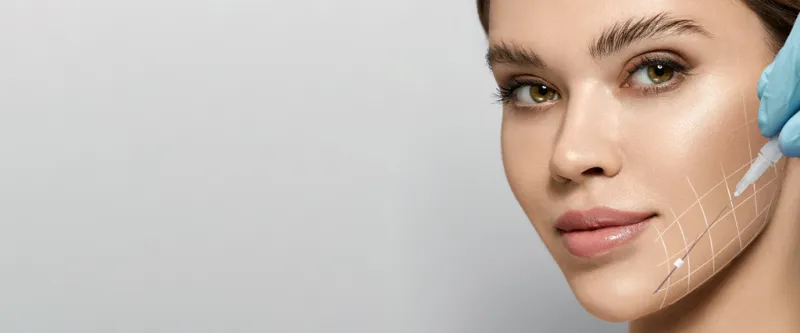
Skin Botox vs Wrinkle Botox: What Actually Differs
Medically reviewed by Dr. Chae-ho Lee, Medical Director, Doctorpetit Clinic Hongdae
The difference between skin Botox and wrinkle Botox is not the product and not really the dose — it is the depth the needle stops at. Doctorpetit Clinic Hongdae runs both as separate named services, and its own descriptions of them differ on exactly that point: one places botulinum toxin into targeted facial muscles, the other spreads small amounts evenly through the shallow layers of the skin. Everything else that distinguishes them, from what they treat to how long they last, follows from that one choice.
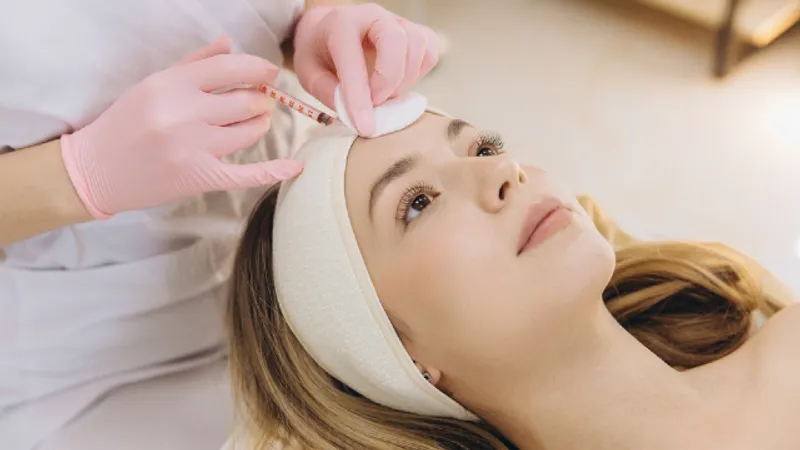
The names describe a destination, not a strength
Patients commonly read "skin Botox" as a weaker version of the same treatment. That reading is understandable and it is wrong, because the two are aimed at different tissue.
For Wrinkle Botox, the clinic's account places a small quantity of botulinum toxin inside selected facial muscles, with the stated purpose of temporarily reducing excessive movement in them. It describes the treatment as minimally invasive and aimed at expression lines that re-form as the face moves, naming three concerns: the forehead, the frown area between the eyebrows, and the region around the eyes.
It describes Skin Botox as a skin-texture treatment in which small amounts of botulinum toxin are evenly injected into the shallow layers of the skin rather than directly into facial muscles, designed to improve the appearance of pores, fine lines, skin elasticity and sebum secretion.
One statement names muscles. The other explicitly says not muscles. A treatment that is deliberately placed above the muscle layer is not a diluted version of a treatment placed inside it; it is a different intervention that happens to use the same molecule.
What each one is actually aimed at
The target lists do not overlap much, and that is the most useful thing to know when choosing.
Wrinkle Botox is described for adults with expression lines caused or worsened by repeated facial-muscle movement. The clinic frames the outcome in two parts: softening the lines that already exist, and reducing the formation of new lines produced by repeated muscle activity.
Skin Botox is described for adults concerned with visible pores, fine lines, excess sebum, uneven skin texture or reduced skin elasticity. The clinic's stated benefits include smoother-looking skin texture, refined-looking pores, sebum control and improved makeup application — a list that contains no reference to expression at all.
There is one line of overlap, and it is worth noticing: "fine lines" appears on both lists. A fine line that deepens visibly when you make an expression is behaving like a muscle-driven concern. A fine crosshatch that is part of the surface quality of the skin is behaving like a texture concern. Which description fits is a matter for examination rather than self-assessment, and the clinic's consultation for Skin Botox explicitly includes assessing facial-muscle movement alongside skin condition — precisely so that this question is settled before anything is injected.
The mechanism in the skin, as published research describes it
Why would toxin placed in the dermis do anything to a pore? This is where it helps to look outside any one clinic's material.
Intradermal botulinum toxin — the delivery of many microdroplets into the upper layers of skin — has been studied as a distinct technique for more than a decade. A review published in the peer-reviewed journal Toxins describes intradermal injection of botulinum neurotoxin as a procedure performed frequently in aesthetic dermatology to improve facial skin tone, texture, fine wrinkles and enlarged pores, and notes that botulinum neurotoxin type A is also used to reduce the oiliness of facial skin.
The explanation that review proposes is chemical rather than muscular: botulinum neurotoxin type A may reduce sebum production by interfering with cholinergic signaling between nerve endings and the sebaceous glands, rather than by relaxing the large expression muscles. It is a gland-level mechanism, which is why it is compatible with placement above the muscle layer.
This literature describes the technique as a category. It is not a statement about any particular clinic's protocol, and it should be read as background to a consultation rather than as a prediction of your own result.
It is also worth noting where the regulatory picture sits. The U.S. Food and Drug Administration, in the consumer guidance where it distinguishes dermal fillers from botulinum toxin products, describes those injectable drugs as approved for the temporary improvement in the appearance of certain facial lines, naming frown lines, forehead lines and crow's feet. Its separate consumer page on wrinkle treatments and anti-aging products draws a related line: something that makes lines less noticeable only by moisturizing or hiding them is a cosmetic, while anything intended to affect the structure or function of the skin is regulated as a drug or a device. Skin-quality uses of the same molecule sit in the clinical literature rather than in that approved-indication language, which is a distinction worth understanding when comparing the two services.
The published timelines are not the same
Doctorpetit Clinic Hongdae publishes a distinct course for each service, and the differences are large enough to matter when planning.
For Wrinkle Botox, the clinic states that effects gradually begin two to three days after treatment, are most noticeable around two weeks, and last approximately two to three months, with treatment recommended roughly every two to three months. The appointment itself is described as approximately five to ten minutes, with same-day recovery.
For Skin Botox, it states that effects gradually appear three to seven days after treatment, with maximum effects around the second week, lasting approximately one to three months, and treatment recommended approximately every one to three months. That appointment is also described as roughly five to ten minutes with same-day recovery.
Two practical readings follow. First, the skin-layer treatment is slower to begin and shorter to last at the lower end of its range, which makes it a less convenient choice for anyone treating in advance of a fixed date. Second, both treatments peak at around the two-week mark, so neither can be fairly judged at the end of the week you had it.
The appointment feels different, and that is informative

A detail that patients notice before any of the above: the comfort measures differ.
For both services, the clinic describes using ice cooling for small areas, and anesthetic cream applied for approximately fifteen minutes for larger ones. In practice this maps onto the two techniques differently. Targeting a specific muscle group means a handful of placements in one region. Treating skin texture means distributing small amounts evenly across a broader surface, which is a larger area by definition — and the clinic notes that at its Hongdae location the cheeks and jawline may be treated at the skin layer to support skin elasticity while relaxing facial muscles.
More injection points across more surface is also why the aftercare emphasis for Skin Botox leans toward not rubbing, pressing or massaging the treated areas immediately after treatment, and following any skincare restrictions the clinician provides.
The products themselves are shared rather than service-specific. The clinic lists Hitox (Korea BMI), Coretox (Meditox), Xeomin (Merz) and Allergan (AbbVie, USA) among the botulinum toxin products it uses, and states that it uses certified genuine products according to the indicated dosage. The product is not the variable that separates these two services.
Which one fits which complaint
A short sorting guide, phrased as the question a clinician would be answering:
A line that deepens markedly when you frown, raise your brows or squint behaves like a muscle-driven concern, which is the territory the clinic describes for Wrinkle Botox.
Visible pores across the cheeks, an oily surface by midday, or a generally rough texture behaves like a skin-quality concern, which is the territory described for Skin Botox.
Skin that looks slack rather than creased is not clearly either; the clinic runs separate non-surgical lifting and skin booster categories for elasticity and skin-quality concerns.
A deep fold that is unchanged whether you move or not points away from both toward its volume-related and resurfacing services.
The American Academy of Dermatology makes the point that a cosmetic treatment can look easy to perform while in fact depending on detailed medical understanding of the skin and the tissue underneath it. Most adult faces present more than one of the concerns above at once, which is why the clinic's stated model is a one-to-one consultation with the Medical Director that assesses facial movement and skin condition together before a plan is proposed. Its doctors page sets out who performs that assessment.
Who should not have either
The exclusions are shared, which is a reminder that the same molecule is involved whatever the depth. The clinic lists, for both services, known allergy or hypersensitivity to botulinum toxin or its ingredients, infection or significant inflammation at the intended injection site, certain neuromuscular conditions, and other circumstances in which a clinician judges treatment inappropriate. Pregnancy or breastfeeding should be discussed with the clinician and may require postponement.
The U.S. Food and Drug Administration states that approved botulinum toxin products carry a boxed warning — its most serious warning — indicating a significant risk of serious or life-threatening side effects, and that the warning covers symptoms of botulism, in which muscle weakness can extend as far as difficulty breathing. It advises seeking immediate medical care for trouble swallowing or breathing after an injection, and receiving these products only from a licensed, trained professional using product from an authorized source. That is the reason the clinic's preparation guidance for both services asks for disclosure of all medications, supplements, allergies, medical conditions, and previous botulinum toxin treatments and reactions.
Side effects named by the clinic for both services include temporary redness, swelling, tenderness, bruising or discomfort at injection sites, with unintended effects on nearby muscles also possible. For either treatment, the clinic advises seeking medical attention for severe or unexpected symptoms, including difficulty swallowing or breathing.
Can you have both?
The clinic's material allows for it without promising it. For Skin Botox it states that the treatment may potentially be combined with other skin-rejuvenation treatments when different concerns are being addressed, with the appropriate combination and treatment sequence determined by the clinician after assessing the patient's skin condition. For botulinum toxin generally it says combination may be appropriate when separate concerns are involved, and that the clinician should determine whether treatments can safely be performed together.
Note what is doing the work in both sentences: different concerns. Two services that treat the same complaint are not a plan. Two services aimed at two findings might be. If you are considering a combined plan, the clinic's contact page is where to raise it before the appointment rather than at the end of one.
The Bottom Line
The defining difference is depth: the clinic describes Wrinkle Botox as injected into targeted facial muscles and Skin Botox as injected evenly into the shallow layers of skin rather than into muscle.
The target lists barely overlap — expression lines on one side, pores, sebum, texture and elasticity on the other.
Published work on intradermal botulinum toxin describes it as aimed at tone, texture, fine lines and enlarged pores, with a proposed sebum mechanism acting at the gland rather than at the muscle.
The timelines differ: the clinic publishes onset at two to three days and duration of two to three months for Wrinkle Botox, against three to seven days and one to three months for Skin Botox.
Exclusions and side-effect profiles are shared, because the same molecule is used in both.
Frequently Asked Questions
Is Skin Botox just a smaller dose of regular Botox?
No. The clinic's distinction is where the toxin is placed, not how much. Skin Botox is described as spread evenly through the shallow layers of skin rather than injected into facial muscles, which makes it a different technique rather than a lighter version of the same one.
Will Skin Botox soften my frown line?
That is not what the clinic describes it for. Its stated targets for Skin Botox are pores, fine lines, elasticity, texture and sebum, whereas a frown line produced by muscle movement sits within the description of Wrinkle Botox. An assessment of how much movement is driving the line settles which applies.
Which one works faster?
Wrinkle Botox, slightly. The clinic publishes onset of two to three days for Wrinkle Botox and three to seven days for Skin Botox, with both reaching their most noticeable effect around the two-week mark.
Does Skin Botox help with oily skin?
The clinic lists sebum secretion among the things Skin Botox is designed to improve, and a review in the journal Toxins describes botulinum neurotoxin type A as used to reduce facial skin oiliness, with a proposed mechanism acting on the sebaceous glands. Individual response varies, and oiliness has causes that an injection does not address.
Will my face still move after Skin Botox?
The treatment is described as placed above the muscle layer, so it is not aimed at reducing expression. The clinic does note that at its Hongdae location the cheeks and jawline may be treated at the skin layer to support elasticity while relaxing facial muscles, so the specifics of your plan are worth asking about directly.
How often would each need repeating?
The clinic recommends Wrinkle Botox approximately every two to three months and Skin Botox approximately every one to three months, depending on individual needs. Both are temporary, and both are described as same-day recovery treatments taking roughly five to ten minutes.
Can one person need both?
Possibly, if there are two separate findings — movement producing a line in one area and a texture concern elsewhere. The clinic frames combination as appropriate when different concerns are being addressed, with the clinician deciding the combination and sequence after assessment.
This article is for general informational purposes and does not constitute individualized medical advice. It is not a self-diagnosis tool. Which treatment suits your skin can only be determined through a consultation with a qualified dermatologist or other appropriately qualified clinician who has examined you in person.
Academic & Clinical Sources
- Toxins — Botulinum Neurotoxin Type A in the Treatment of Facial Seborrhea and Acne
- American Academy of Dermatology — Botulinum Toxin Therapy: Overview
- American Academy of Dermatology — Cosmetic Treatment Safety
- FDA — Dermal Filler Do's and Don'ts
- FDA — Wrinkle Treatments and Other Anti-Aging Products
- FDA — Warning on Illegal Marketing of Botulinum Toxin Products
Ready for Your Personalized Aesthetic Consultation in Hongdae?
Located right at Hongik Univ. Station Exit 1 (8F, 151 Yanghwa-ro, Mapo-gu). Multilingual coordinators for English, Traditional Chinese, and Simplified Chinese patients.