Hongik Univ. Station Exit 1 · 8F · 1:1 Personalized Aesthetic Dermatology
en-US

IPL Photorejuvenation
IPL photorejuvenation in Seoul: multi-wavelength light for redness, sun spots and uneven tone, performed by Dr. Chae-ho Lee at Doctorpetit Clinic Hongdae.
Personalized Consultation & Custom Quote

IPL Photorejuvenation in Seoul

Medically reviewed by Dr. Chae-ho Lee, Medical Director, Doctorpetit Clinic Hongdae; Member, Korean Society of Laser Dermatology & Hair
Doctor profile · Doctorpetit Clinic Hongdae, Seoul
IPL Photorejuvenation is a light-based skin treatment that uses multiple wavelengths of intense pulsed light to target superficial pigmentation and improve the look of facial redness. At Doctorpetit Clinic Hongdae in Seoul, an IPL photofacial session takes about 5–10 minutes, and you can go back to your day straight afterwards. Most people plan a short series of sessions spaced three to four weeks apart.
What Is IPL Photorejuvenation?
IPL Photorejuvenation is a non-invasive outpatient treatment in which a handpiece delivers brief pulses of broadband light, spanning several wavelength ranges, to even out sun spots, freckles, redness, and overall skin tone.
- Many wavelengths in one flash: unlike a conventional laser, which emits one wavelength, an IPL device releases a broad range of wavelengths with each pulse.
- Targeting color in the skin: IPL systems work by having specific colored targets absorb the light and convert it into heat, according to DermNet's overview of intense pulsed light; brown pigment and the red of small blood vessels are the main targets for photorejuvenation.
- Surface-level pigment: the clinic describes IPL as particularly useful for superficial pigmentation, the kind that sits near the top of the skin.
- Redness: improving facial redness is one of the clinic's stated benefits of IPL.
- Gradual change: results build across a course of treatments rather than appearing after a single flash.
IPL versus laser toning
The question of IPL versus pico or other laser toning comes up often, because both are used for pigment. The clinic draws a clear line between them. IPL uses multiple wavelength ranges and is aimed mainly at superficial pigmentation and redness. Laser toning uses two wavelengths and may be chosen when pigment sits deeper, in the dermis. Neither is simply "better"; the right choice depends on how deep your pigment lies and whether redness is part of the picture. Sometimes the two are used together, which is covered further down this page.
Where IPL fits among treatments for sun damage
Intense pulsed light is one of several options dermatologists use for age spots and for a blotchy or ruddy complexion, as the American Academy of Dermatology's guide to treating sun-damaged skin explains. The same guide stresses that a spot should be examined before it is treated as cosmetic, because a skin cancer can be mistaken for an age spot. That is one reason an assessment always comes before the first flash.
Who Performs IPL Photorejuvenation at Doctorpetit Clinic Hongdae

Dr. Chae-ho Lee
Medical Director at Doctorpetit Clinic Hongdae
IPL at Doctorpetit Clinic Hongdae is performed under Dr. Chae-ho Lee, the Medical Director and the only physician at the clinic. IPL is one of the subspecialty techniques listed for him, and laser and skin rejuvenation is among his core specializations. He is a member of the Korean Society of Laser Dermatology & Hair. Before each course, he looks at your pigmentation, redness, and general skin condition, decides whether IPL suits you, and chooses the settings, or recommends a different treatment if that would serve you better. English consultation and interpretation support are available throughout.
Who Is a Good Candidate for IPL Photorejuvenation?
IPL suits people whose main concerns sit near the skin's surface and who can commit to a few visits. You may be a good candidate if you have:
- Superficial pigmentation, such as sun-related spots or freckles.
- Visible facial redness.
- An uneven skin tone that you would like to look more even.
- Signs of sun damage across the face.
- A preference for a quick outpatient treatment that fits around a busy schedule.
- Skin that has been assessed as appropriate for light-based treatment.
Treatment is usually deferred, or ruled out, when any of these apply:
- An active skin infection or another active skin condition in the area.
- Significant irritation of the skin.
- Recent tanning.
- Significant photosensitivity, or a photosensitive medical condition.
- Medications that increase sensitivity to light.
- Other medical factors that make light-based treatment unsuitable.
Suitability also depends on your skin type and the particular pigment concern. Some pigment problems respond better to a different approach, and Dr. Lee will tell you if that is the case.
What to Expect: Procedure, Recovery, and Results Timeline
Before your appointment
Keep the treatment area out of strong sun, and avoid tanning in the period before IPL. Follow any advice about pausing irritating skincare products or holding off on other cosmetic treatments. Arrive with clean skin unless you are told otherwise. Tell the clinic about any medications, recent tanning, recent skin treatments, and any history of unusual skin reactions.
On the day, step by step
- Skin assessment: Dr. Lee examines your pigmentation, redness, and skin condition and confirms IPL is the right option.
- Choosing settings: IPL settings are selected for your skin and the concern being treated.
- Comfort: numbing cream is usually unnecessary, but it can be applied if you would like extra comfort.
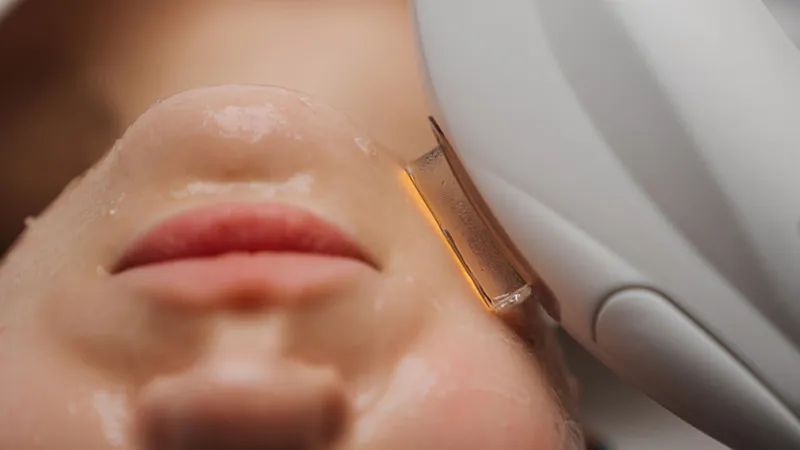
- Light pulses: the handpiece delivers pulses of light across the treatment area; most people feel brief warmth or a snapping sensation with each one.
- Aftercare briefing: you receive sun-protection and home-care instructions.
- Planning the series: the next session is usually set three to four weeks later.
The light-delivery part of the visit takes about 5–10 minutes. Protective eyewear is standard during IPL treatment in general, as DermNet notes.
Recovery and results timeline
| Time after treatment | What usually happens |
|---|---|
| Immediately | Return to daily activities is possible; mild redness, warmth, or slight swelling may appear |
| First hours to a few days | Redness and warmth usually settle |
| Around days 2–3 | Small scabs or flakes may form over treated spots |
| Following days | The scabs or flakes fall away naturally; treated pigment may look darker before it fades |
| Several days to a few weeks | Some improvement in tone or pigment may become noticeable |
| Weeks 3–4 | The next session is usually due |
| Across 3–5 or more sessions | The desired effect generally develops over the course |
The final appearance is usually judged once the skin has finished healing and clearing pigment, which can take several weeks after a session. Results vary with your individual skin condition.
Aftercare
Protect the treated skin from the sun. Use gentle skincare. Do not pick at or remove the small flakes or scabs; let them shed on their own. Follow any specific instructions Dr. Lee gives you.
Planning around your trip
Many IPL sessions can be completed in a single visit, and the treatment generally does not require a prolonged stay. Because IPL is non-surgical, many people can travel shortly after treatment if they feel well and have no significant skin reaction. If you want a full series, plan for return visits roughly every three to four weeks, or combine a first session in Seoul with a schedule agreed at consultation.
Combining IPL Photorejuvenation with Other Treatments
The clinic states that IPL and laser toning may sometimes be performed together, depending on your skin condition. The idea is that the two reach pigment at different depths: IPL for superficial pigment and redness, laser toning for deeper pigment.
- Pico Toning / Majesty — the clinic's picosecond laser option within the same specialty; whether to pair it with IPL is decided after your skin is examined.
Combinations are never applied automatically. Dr. Lee decides whether a pairing makes sense, and in what order, based on what he sees at consultation.
Safety, Precision, and Clinic Standards
The Ministry of Health and Welfare in Korea first listed Doctorpetit Clinic Hongdae as a foreign-patient medical institution in January 2023. Every IPL course begins with an in-person look at your pigment, redness, and skin condition. IPL settings are chosen for your skin rather than applied as a single preset. Recent tanning and photosensitivity are screened for before treatment goes ahead.
Known risks
Common temporary effects after IPL include redness, warmth, mild swelling, sensitivity, and brief darkening of pigmented spots. Small scabs or flakes can appear within two to three days. Less commonly, IPL can cause burns, blistering, prolonged redness, changes in pigmentation, scarring, or a worsening of pigmentation.
DermNet describes the usual aftermath of IPL as feeling like a mild sunburn for a few days, and notes that blistering can rarely occur if skin pigment absorbs too much light energy. The same source reports that damage to pigment cells can occasionally leave darker or paler patches, and that bruising affects up to 10% of patients.
Skin tone matters too. The AAD's overview of laser and light treatments points out that darker skin is more prone to burns and dark marks after such procedures. Telling Dr. Lee how your skin has reacted to sun, injury, or past treatments helps him decide whether IPL is appropriate and how to set it.
If you notice blistering, worsening redness, or any unusual change, contact the clinic promptly.
The Bottom Line
- IPL Photorejuvenation uses multi-wavelength light to target superficial pigmentation and improve facial redness.
- Each session takes about 5–10 minutes, and daily activities can resume immediately.
- Small scabs or flakes may appear around days 2–3 and should be left to fall off.
- A course usually involves 3–5 or more sessions at three- to four-week intervals.
- Dr. Chae-ho Lee, for whom IPL is a listed subspecialty technique, assesses every patient first.
Frequently Asked Questions
Does IPL hurt?
Most people feel brief warmth or a snapping sensation with each pulse of light. How it feels depends on the area, your skin sensitivity, and the settings. Numbing cream is not normally needed but can be applied on request.
How many IPL sessions will I need?
The clinic notes that three to five or more sessions may be needed for the effect you want. Sessions are commonly spaced three to four weeks apart. The exact number depends on your skin and the concern being treated.
Why do my spots look darker after IPL?
Treated pigment can temporarily darken before it gradually fades. Some people also see small flakes or scabs around two to three days later. These shed naturally and should not be picked.
Is IPL or laser toning better for my pigmentation?
It depends on depth. The clinic describes IPL as particularly useful for superficial pigment and redness, while laser toning may be used for deeper, dermal pigment. In some cases both are used together after assessment.
Can I fly home soon after IPL?
Because IPL is non-surgical, many people can travel shortly after treatment if they feel well and the skin is not significantly reacting. A single session usually fits into one clinic visit.
When will I see results?
Some improvement in tone or pigment may appear within several days to a few weeks. The final result is judged after the skin has finished healing and clearing pigment, which can take several weeks.
Who should not have IPL right now?
Treatment may need to wait if you have an active skin infection, significant irritation, a recent tan, or a photosensitive condition or medication. Dr. Lee checks these points before treatment.
What should I do if something looks wrong after I get home?
Contact the clinic through its website or by phone and describe what you are seeing. For persistent or worsening symptoms, also see a doctor locally.
Book a Consultation at Doctorpetit Clinic Hongdae
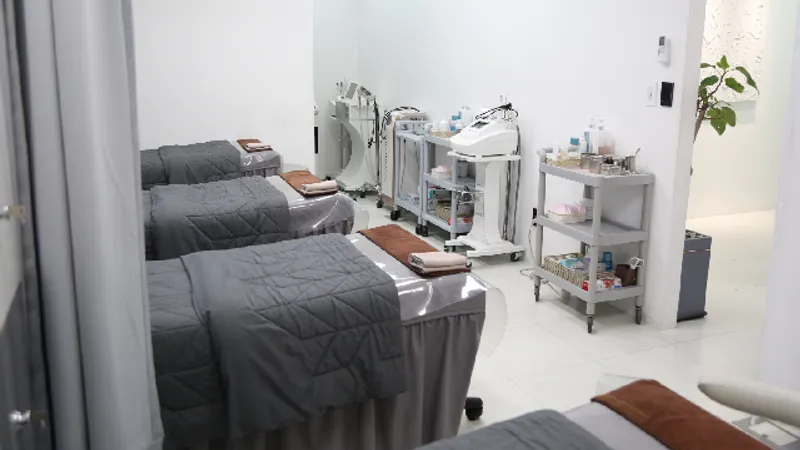
If redness, freckles, or sun spots are your main concern, a consultation for IPL photorejuvenation in Seoul with Dr. Lee will confirm whether light treatment suits your skin and how many sessions to expect. The clinic is on the 8th floor of the Wookdo Building, 151 Yanghwa-ro, Mapo-gu, a few steps from Hongik University Station Exit 1. Book your consultation online, and look through before-and-after photos while you plan.
Disclaimer
Treatment suitability, expected results, recovery time, risks, and potential side effects vary by individual. The information provided is for general informational purposes and does not replace an in-person medical consultation. Patients should discuss their medical history, treatment goals, and individual circumstances with a qualified medical professional before undergoing treatment.
Sources & Further Reading
Ready for Your Personalized Aesthetic Consultation in Hongdae?
Located right at Hongik Univ. Station Exit 1 (8F, 151 Yanghwa-ro, Mapo-gu). Multilingual coordinators for English, Traditional Chinese, and Simplified Chinese patients.