Hongik Univ. Station Exit 1 · 8F · 1:1 Personalized Aesthetic Dermatology
en-US

Keloid & Scar Injection
Keloid and scar injection in Seoul to help soften and flatten raised, itchy, or painful scars, performed by Dr. Chae-ho Lee at Doctorpetit Clinic Hongdae.
Personalized Consultation & Custom Quote

Keloid & Scar Injection in Seoul

Medically reviewed by Dr. Chae-ho Lee, Medical Director, Doctorpetit Clinic Hongdae; Member, Korean Society of Clinical Aesthetic Medicine
Doctor profile · Doctorpetit Clinic Hongdae, Seoul
A keloid injection in Seoul places a small amount of medication directly into a raised scar to calm the overactive tissue inside it, so the scar gradually becomes softer, flatter, and less red. At Doctorpetit Clinic Hongdae, the treatment is offered for keloids that itch or hurt and for raised scars where a better appearance is wanted. Each appointment takes about 20 to 40 minutes, and most scars need a series of sessions.
What Is Keloid & Scar Injection?
Keloid and scar injection is a treatment in which medication is injected into abnormally overgrown scar tissue to slow the cells that keep producing it, soften the scar, and reduce its bulk. The clinic describes it as a corticosteroid-class injection given directly into keloid or hypertrophic scar tissue and repeated over several sessions.
- It targets fibroblasts. These are the cells that make collagen. In a keloid they stay overactive, and the injection is intended to inhibit their proliferation.
- It calms inflammation. The clinic states the injection can suppress inflammation inside the scar, which is linked to redness, itching, and pain.
- It regulates collagen. By reducing excessive collagen formation, the treatment aims to ease how far the scar protrudes above the skin.
- It works from inside the scar. The medication is placed into the scar itself rather than applied to the surface, so it reaches the dense tissue directly.
- It is gradual. Softening and flattening build over repeated injections rather than appearing after one visit.
Keloids versus hypertrophic scars
Both are raised scars caused by abnormal wound healing, but they behave differently. A keloid tends to keep growing beyond the boundaries of the original wound. A hypertrophic scar stays within the wound area and may partly settle on its own over time. A dermatology textbook chapter on scar management notes that hypertrophic scars tend to respond better to intralesional corticosteroid than keloids, which may need repeated interventions (NCBI Bookshelf — Textbook on Scar Management: Corticosteroids). This difference matters when you think about how many sessions you may need.
Who Performs Keloid & Scar Injection at Doctorpetit Clinic Hongdae

Dr. Chae-ho Lee
Medical Director at Doctorpetit Clinic Hongdae
Keloid and scar injections at Doctorpetit Clinic Hongdae are given by Dr. Chae-ho Lee, the Medical Director and the clinic's only physician. This treatment area is offered as a clinic service led by the Medical Director rather than as one of Dr. Lee's stated core specializations. He evaluates each scar's size, location, thickness, color, symptoms, and progression, reviews your medical history, and decides whether injection is the right approach or whether another form of scar management would suit you better. He is a member of the Korean Society of Clinical Aesthetic Medicine. Because he also performs your follow-up sessions, the plan can be adjusted according to how your scar responds.
Who Is a Good Candidate for Keloid & Scar Injection?
Suitability depends on the type of scar and a medical assessment.
You may be a good candidate if you have:
- A keloid that itches or causes pain.
- A raised scar for which you want cosmetic improvement.
- A thickened hypertrophic scar that has not settled on its own.
- A raised scar that is prominent, red, or protruding.
- Realistic expectations about gradual change and the likelihood of repeat sessions.
Injection may not be suitable, or may need to be postponed, if you have:
- An active infection at the treatment site.
- An allergy or contraindication to the medication used.
- A condition affecting the treatment area that needs attention first.
- A scar that requires a different treatment approach, as judged at examination.
The doctor will also consider your scar's history, symptoms, and any previous treatments before recommending injection.
What to Expect: Procedure, Recovery, and Results Timeline
Before your appointment
Tell the doctor about allergies, medications, supplements, previous reactions to injections, and any existing skin conditions. Mention any recent changes or new symptoms in the scar. Medicines that may affect bleeding or healing are particularly important to disclose. Do not stop or change any medication on your own before an injection. Keep the treatment area clean and follow any preparation instructions the clinic gives you.
On the day
- Assessment. Dr. Lee examines the scar's size, location, thickness, color, and symptoms, and reviews your history.
- Plan. He decides whether injection is appropriate and outlines an individualized treatment plan.
- Comfort. Depending on the scar location and your comfort, topical or local anesthetic may be considered.
- Cleansing. The area is cleaned.
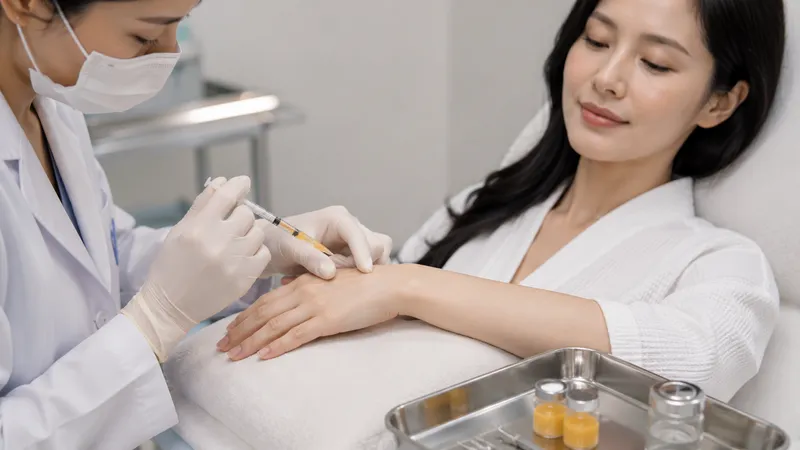
- Injection. A small amount of medication is injected directly into the keloid or raised scar.
- Aftercare. You receive instructions for the treated area and, if a series is planned, a date for the next session.
The appointment takes approximately 20–40 minutes for the injections. Temporary stinging, tenderness, or discomfort can occur during injection, and the amount varies with the scar and site.
Recovery and results
| Timing | What typically happens |
|---|---|
| During the visit | Brief stinging or discomfort as the medication goes in. |
| Same day | Downtime is often limited. Tenderness, redness, mild swelling, or bruising at the injection site may appear. |
| Following days | Injection-site effects are usually temporary, although their duration varies. |
| Weeks | Scar improvement is gradual. The time to visible change depends on the scar's size, thickness, age, and response. |
| Across repeated sessions | Repeated injections may be necessary, with the interval and number set by the size and condition of the scar. |
Aftercare
Keep the treated area clean. Avoid unnecessary pressure or irritation on the scar. Follow the clinic's instructions for the days after treatment. Contact the clinic if you notice significant or persistent pain, swelling, redness, or any unusual reaction.
What the evidence says about results
Injecting a corticosteroid into a keloid is a long-established treatment. The American Academy of Dermatology explains that patients usually receive a series of injections, that the first injections tend to relieve symptoms and make the keloid feel softer, and that between 50% and 80% of keloids shrink after being injected. The same AAD guidance also notes that many keloids regrow within five years, which is why dermatologists often combine injections with other treatments. The scar management textbook chapter describes intralesional corticosteroid as a first-line treatment that significantly decreases scar volume and eases pain and itching.
Combining Keloid & Scar Injection with Other Treatments
Keloids are difficult to treat with any single method. The clinic states that keloid and scar injections may be combined with other scar-management treatments when appropriate, depending on the scar's size, thickness, location, and response to treatment. The clinic also lists alternatives that may be considered depending on the scar's characteristics:
- Silicone-based scar management.
- Laser or light-based treatments.
- Cryotherapy.
- Surgical scar revision.
- Other doctor-directed scar treatments.
Whether one of these is added, and when, is decided after the scar has been examined and its response to injection has been assessed. Combining approaches is consistent with the AAD's observation that using two or more types of treatment often improves keloid results.
Safety, Precision, and Clinic Standards
- The clinic's standing as a Ministry of Health and Welfare-registered institution for international patients goes back to January 2023.
- Each scar is examined in a one-on-one consultation with the Medical Director before any injection.
- The plan considers scar size, location, thickness, color, symptoms, and progression.
- The clinic states that it uses genuine products according to the indicated dosage.
- Injections are repeated only as the scar's condition and response warrant.
Risks and side effects
Injection-related effects can include temporary pain, redness, swelling, bruising, or tenderness at the site. Depending on the medication, other effects can occur, including changes to the treated skin or surrounding tissue. Recurrence of the scar is also possible. Medication-specific risks should be discussed with the doctor before treatment.
For corticosteroid injections into scars in general, the textbook chapter reports that localized side effects such as skin thinning (atrophy), small visible blood vessels (telangiectasia), and lightened skin occur in roughly one-third of patients. It recommends using the lowest effective concentration and quantity to reduce these effects. Skin tone matters too: in people with darker skin, corticosteroid injections can leave light spots where they are given, according to the AAD, which notes that other medications can be used to prevent this. If you have a darker skin tone or a history of pigment changes, raise it at your consultation.
The Bottom Line
- Keloid and scar injection places medication into a raised scar to soften it, flatten it, and reduce redness, itching, and pain.
- The clinic describes it as a corticosteroid-class injection, and each appointment takes about 20–40 minutes.
- Improvement is gradual, and repeated sessions are usually needed, especially for keloids.
- Keloids can return, so injections are often paired with other scar-management methods.
- Dr. Chae-ho Lee examines every scar and is the performing doctor for this treatment.
Frequently Asked Questions
How many keloid injections will I need?
There is no fixed number. The interval and total number of sessions depend on the size and condition of the scar and how it responds. Keloids often need more sessions than other raised scars.
Does a keloid injection hurt?
You may feel temporary stinging, tenderness, or discomfort as the medication is injected into the dense scar tissue. Depending on the site and your sensitivity, topical or local anesthetic may be considered. The discomfort usually passes quickly.
Will the keloid come back after treatment?
It can. Recurrence is one of the risks to discuss with the doctor, and outside guidance notes that many keloids that shrink after injection regrow within a few years. Combining injections with other scar-management treatments may help, depending on the scar.
Can I treat an ear keloid this way?
The AAD notes that corticosteroid injections can be especially helpful for a keloid on an ear. Whether injection suits your ear keloid depends on its size, thickness, and history, which Dr. Lee assesses in person. He may also discuss other scar-management options alongside the injections.
How long should I stay in Seoul for keloid treatment?
A single injection is an outpatient procedure and does not require a long stay. If repeated injections are recommended, the plan will involve further visits, so discuss scheduling across trips with the clinic.
When can I fly after a scar injection?
This is not surgery, so there is no surgical recovery period that automatically delays flying. Confirm your situation with the doctor, especially if you have significant swelling, bleeding, pain, or another unexpected reaction.
What should I do if something looks wrong after I return home?
Reach out by phone or via the clinic website, and explain what has changed and when it began. For significant or worsening pain, swelling, or redness, seek local medical care as well.
Book a Consultation at Doctorpetit Clinic Hongdae

If a raised or itchy scar is bothering you and you are considering keloid injection in Seoul, start with an examination by Dr. Chae-ho Lee, who will look at the scar's history and thickness and explain whether injection, another approach, or a combination makes sense. English interpretation is available. The clinic is on the 8th floor of the Wookdo Building at 151 Yanghwa-ro, Mapo-gu, steps from Exit 1 of Hongik University Station. Request a consultation online, and read patient reviews before your visit.
Disclaimer
Treatment suitability, expected results, recovery time, risks, and potential side effects vary by individual. The information provided is for general informational purposes and does not replace an in-person medical consultation. Patients should discuss their medical history, treatment goals, and individual circumstances with a qualified medical professional before undergoing treatment.
Sources & Further Reading
Ready for Your Personalized Aesthetic Consultation in Hongdae?
Located right at Hongik Univ. Station Exit 1 (8F, 151 Yanghwa-ro, Mapo-gu). Multilingual coordinators for English, Traditional Chinese, and Simplified Chinese patients.